




BLOG

Guide: How to uninstall Chrome extensions step by step

Learn how to install and uninstall Chrome extensions. This guide covers everything you need to know about managing Chrome extensions easily.

hero image blog
📝 Category:

Marketing resources

📆 Last update:

01/2026

Key Takeaways

Chrome extensions improve your experience on Google Chrome, but sometimes they can Slow down the browser, put security risks, or become useless. In 2026, with more than 2.65 billion users of Chrome and more than 163,000 extensions available, knowing how to uninstall or deactivate extensions is essential to optimize your browsing.

nombre d'extensions chrome dans le temps
Number of Chrome extensions over time

This tutorial explains how delete cleanly an extension, deactivate temporarily, manage the malicious extensions, or bypass corporate restrictions.

How do I access the list of extensions in Google Chrome?

To see your extensions:

  1. Open Google Chrome.
  2. Click on the Three points (menu) at the top right.
  3. Go in Extensions > Manage extensions (or type chrome: //extensions/ in the address bar and press Enter).
  4. The page of extension manager is displayed, listing all installed extensions.

How do I properly uninstall a Chrome extension?

To remove an extension:

  1. Access the extension manager (chrome: //extensions/).
  2. Find the extension to remove (e.g. Grammarly, AdBlock).
  3. Click on the button Delete under the extension.
  4. Confirm by clicking Delete in the pop-up window.
  5. Restart Chrome to apply the changes (optional, but recommended).
  6. Verify that the extension is gone by going back to chrome: //extensions/.

Difference between deactivating and deleting an extension

🔧 Extension Management Actions and Best Practices (2026)
Action Description Impact When to Use
Disable Puts the extension in pause without uninstalling it Preserves data and settings; stops all activity Testing performance or keeping for future use
Remove Deletes the extension and all its data permanently Reclaims storage space and fully removes access When the extension is no longer needed or suspected of being harmful

How to deactivate : In chrome: //extensions/, toggle the switch under the extension of bruise (active) to grey (inactive).

What if an extension can't be removed?

Some extensions, especially those installed by corporate policies Or Malwares, are resistant to conventional suppression. Here are the solutions:

  1. Check developer mode :
    • In chrome: //extensions/, activate the Developer mode (top right).
    • Note theID of the extension (e.g.: abcdef123456).
    • Manually delete files in the extensions folder:
      • Windows : C:\Users\ [YourName]\ AppData\ Local\ Local\ Local\ Local\ Google\ Google\ Chrome\ User Data\ Default\ Extensions\ [ID].
      • mac : ~/Library/Application Support/Google/Chrome/Default/Extensions/ [ID].
      • Chromebook : Not directly accessible; go to the next step.
  2. Reboot Chrome :
    • Go in Settings > Reset and clean up > Restore defaults.
    • This removes extensions and resets settings without deleting favorites.
  3. Contact the administrator : If the extension is imposed by a group policy, only the admin can delete it.

Differences between Windows, Mac, and Chromebook

🔧 Browser Extension Management by Operating System (2026)
Système Access to Extensions Manual Removal Enterprise Policies Cleanup Tool
Windows chrome://extensions/ AppData\Local folder Managed via GPO Yes (Clean computer tool)
Mac chrome://extensions/ ~/Library folder Via MDM (Jamf) No (third-party antivirus)
Chromebook chrome://extensions/ Not accessible Controlled by Google Workspace admin No (requires reset)

Specificities:

  • Windows : More vulnerable to malware; use the cleaning tool.
  • mac : Files hidden in ~/Library, visible via Terminal (ls -la).
  • Chromebook : Increased security, but extensions imposed by the school/company require an admin.

Note: Chrome extensions also work in a few other browsers based on Chrome, Arc, Opera being a great example.

Manage extensions imposed by a company

Extensions installed via a group policy (e.g. corporate ad blockers, productivity tools) are locked. Solutions:

  1. Check the source : In chrome: //extensions/, enterprise extensions show” Installed by the administrator ”.
  2. Contact the IT admin : Request deletion via Google Admin Console or Microsoft GPO.
  3. Deactivate temporarily : If allowed, toggle the switch in chrome: //extensions/.
  4. Personal account : Use a Distinct Chrome profile to bypass the restrictions (click on your avatar > Add a profile).

Comparison of removal methods

Méthode Difficulté Efficacité Cas d’usage Temps estimé Outils / Exemples
Gestionnaire d’extensions Facile Élevée Suppression des extensions standard 1 min
  • Gestionnaire intégré de Chrome
Suppression manuelle Moyenne Élevée Retrait des fichiers d’extension cachés 5 min
  • Explorateur Windows
  • Accès via chrome://extensions
Réinitialisation Chrome Facile Très élevée Retour aux réglages par défaut pour résoudre tous les problèmes 2 min
  • Menu Paramètres → Réinitialiser
Outil de nettoyage Facile Moyenne Nettoyage des malwares et PUP sur Windows 10 min
  • CCleaner
  • AdwCleaner
Antivirus tiers Moyenne Élevée Détection et suppression d’extensions malveillantes 15 min
  • Malwarebytes
  • Windows Defender

How do I remove malicious extensions?

Malicious extensions (e.g. hijackers, trackers) can steal passwords, show pop-up notifications, or slow down Chrome. Here's how to get rid of them:

  1. Identify the suspicious extension:
    • In chrome: //extensions/, look for extensions that are unknown or with excessive permissions (e.g. access to all site data).
    • Check reviews on the Chrome Web Store or via VirusTotal (analyzes the extension URL).
  2. Deleted via manager : Follow the classic uninstall steps.
  3. Use the Chrome cleaning tool:
    • On Windows, go in Settings > Reset and clean up > Clean the computer
    • Click on Search to detect malware.
    • Mac/Chromebook : No built-in tool; use an antivirus like Malwarebytes (4.8/5, PCMag).
  4. Safe mode : Start Chrome in private browsing mode (Ctrl+Shift+N) to check if problems persist.

Avoid them 3rd party extensions not verified and limits permissions (click on” Details ” in chrome: //extensions/ to adjust).

How to install a Chrome extension

There are several ways to install a Chrome extension, but we're going to go through the “normal” method first.

Step 1 : Choose a Chrome extension in the Chrome Web Store.

Step 2 : Select the button called Add to Chrome.

Step 3 : Choose Add an extension when you see the installation window.

To add your own homemade Chrome extension, you first need to enable a special mode so that Chrome lets you import the raw files:

Step 1 : Select the three-dot menu at the top right of Chrome.

Step 2 : Go to More tools > Expansions.
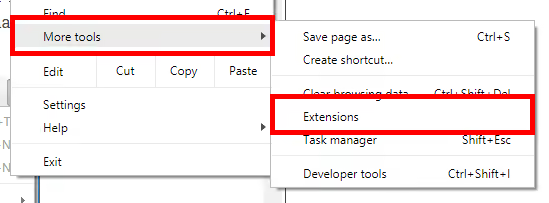
Step 3 : Click on the button next to Developer mode at the top of the page.

Step 4 : Choose the button Load unpacked.

Step 5 : Locate and select the folder that contains the Chrome extension files.

Step 6 : Choose Select the folder.

Follow these steps to install a Chrome extension that's not in a folder, like a CRX file that you downloaded from a third-party site or compiled yourself:

  1. Repeat steps 1 through 3 above (starting with the second set of instructions).
  2. From the Extensions screen, drag and drop the CRX file onto the page.
  3. Select Add an extension.

Make Chrome extensions work in Incognito mode

Chrome extensions are not activated in incognito mode. At least not by default. But if you want, you can force Chrome to enable extensions in incognito mode from the Extensions page:

Step 1 : Go to the Extensions page using the instructions above. Do it from a normal Chrome window (not incognito).

Step 2 : Select the button Details next to the extension in question.

Step 3 : Scroll to the setting Allow in incognito mode and activate the option by selecting the button on the right.

How to uninstall a Chrome extension

Removing extensions from Chrome is very easy. You can do it in a way hugely simple from the toolbar, but if the extension is not visible, there is another way to access the uninstall option. Both are described below.

Note: As mentioned above, one of the reasons to uninstall a Chrome extension is that it was accidentally added to your computer via malicious software. If that's the case, don't forget to remove the virus or other malicious software before it causes any more damage or inconvenience.

Does the extension icon appear in the toolbar? If yes, right-click on it and select Remove from Chrome... in the dropdown menu.

If you don't see the extension icon, it may be because you've hidden it. Another reason is that you are in incognito mode and the extension is not set to be used in this mode (that is, it only works in normal mode, which is the default option for all extensions).

Fortunately, there is another way to remove the extension. For Chrome extensions that are not currently visible, open the Extensions page to see all installed extensions:

Step 1 : Select the Chrome three-dot menu and go to More tools > Expansions.

Step 2 : Locate the extension you want to remove.

Step 3 : Choose the button Remove.

Step 4 : Confirm the uninstallation by selecting Remove one more time.

FAQ

You may also be interested in