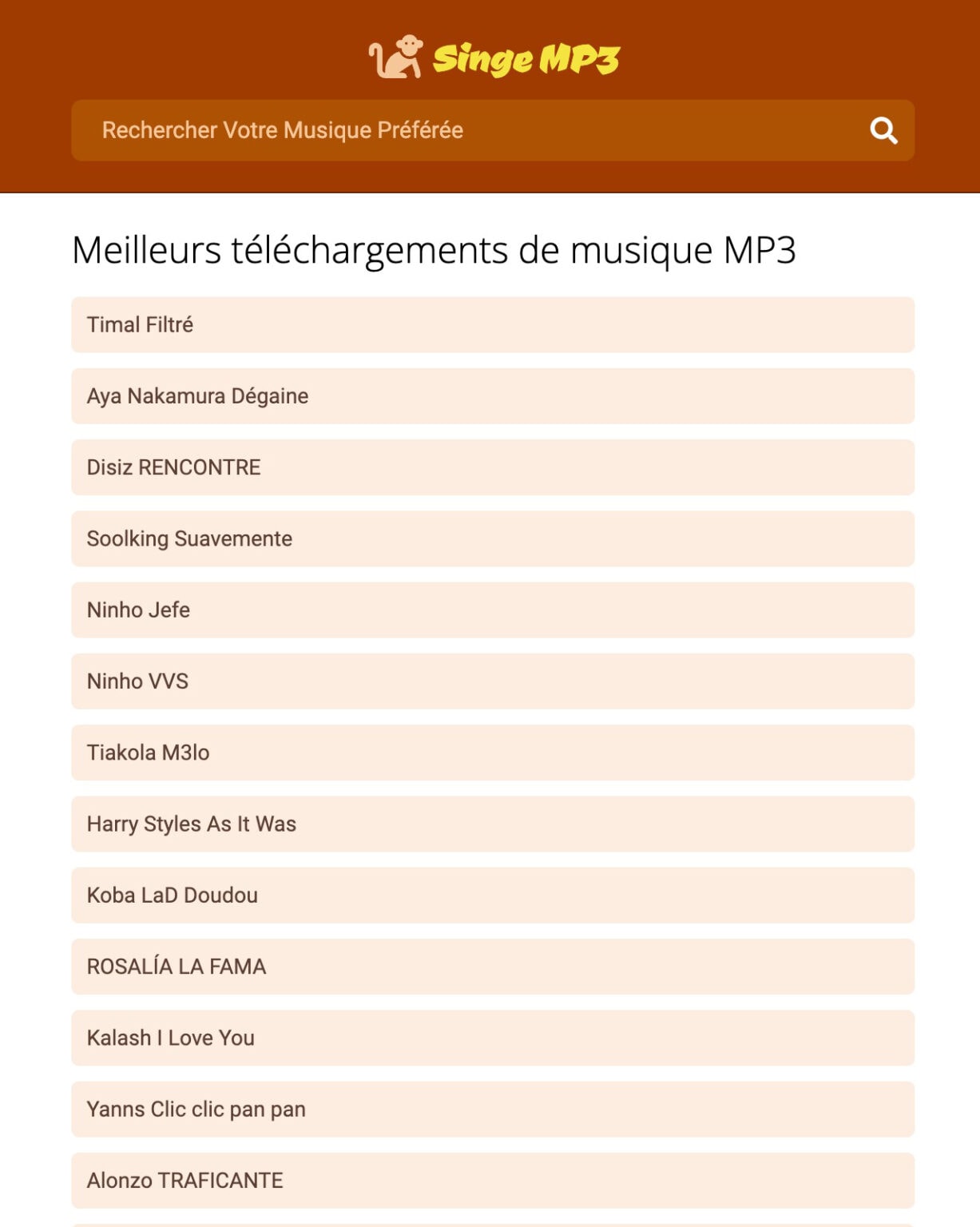
Singe MP3 made history in the world of music downloading by providing a new way to access free MP3 files in the early 2000s, before becoming a symbol in copyright debates.
Nowadays, apps allow you to search, listen to, and download MP3 music for free.
What was Singe MP3?
Singe MP3 was a free music download site, famous for its quick music search and vast library. At its peak, it attracted millions of users thanks to the variety and authenticity of its musical and audio content, allowing users to search for songs by title, artist, or album, embodying the digital music revolution.
How popular was it?
Singe MP3 became extremely popular among music lovers. The platform stood out for the diversity and quality of its content, offering a vast music catalog that was regularly updated.
A global phenomenon
In the 2000s, Singe MP3 was a must-have, especially for young people and those with modest incomes, thanks to its easy access to free MP3 music. It challenged the traditional music industry, becoming a cornerstone of music culture.
Impact on music
Singe MP3 popularized the MP3 format, sped up the shift to digital music, and paved the way for services like iTunes and Spotify, redefining the music market. Additionally, Singe MP3 offered a vast collection of high-quality tracks, allowing users to browse and listen to a large number of music pieces for free, while respecting usage rights.
What are the legal implications?
Music streaming services have revolutionized how we consume music. By using ads, these platforms allow users to access a vast catalog of songs for free, making legal music consumption more appealing with a better user experience.
Downloading via Singe MP3 often violated copyright laws, exposing users to fines or lawsuits. By 2026, laws like the DMCA strengthen artist protection (RIAA), ensuring those who contribute to music creation are fairly rewarded for their work.
What legal alternatives are there?
Streaming platforms and legal download sites offer modern options:
It's also possible to download music through legal platforms, ensuring respect for copyright.
Platform
Type
Features
Price
Rating
Spotify
Streaming
Library of >100 M tracks, collaborative playlists, integrated podcasts
Singe MP3 made history on the web as a groundbreaking platform, making music accessible to everyone with just a few clicks.
The apps available on Google Play also allow users to search, listen to, and download MP3 music for free via Singe MP3.
With an intuitive interface and a massive library, this site attracted millions of users, despite the controversies over copyright issues.
Aspect
Details
Mission
Provide a simple and fast alternative to traditional downloading methods, with multi-platform access
Strengths
Smooth and clean interface, vast song catalog, support for collaborative playlists, integration with voice assistants
Challenges
Copyright issues on some tracks, variable file quality depending on the source, reliability of external links
Legacy
Major influence on modern digital music consumption, pioneer of offline streaming services
Security & Privacy
TLS encryption for downloads, no personal data collection, option for automatic log deletion
Business Model
Free with non-intrusive ads, Premium option without ads at €4.99/month
Scalability
Support for MP3, FLAC, AAC formats; ability to add plugins for new platforms
Despite its controversies, Singe MP3 paved the way for a new era, forever changing the way we discover and share music.
The New Streaming Stars
Goodbye to risky downloads! (or the pirated version with a sketchy link)
Streaming giants like Spotify, Deezer, and Apple Music now dominate the music scene.
These platforms highlight artists, allowing users to search for music by artist name, song title, or album. They combine accessibility, legality, and innovation for an unparalleled user experience.
Streaming allows you to:
Unlimited Catalog: Millions of tracks at your fingertips.
Flexibility: Listen online or offline with downloads.
Personalization: Custom playlists and smart recommendations.
Quality: Crystal-clear sound, far from the dubious files of the past.
Personalized Flow, synchronized lyrics, HiFi available
€9.99 (Premium)
★★★★☆ (4.2/5)
Apple Music
Paid (3-month trial)
Siri integration, lossless quality, music videos
€10.99
★★★★☆ (4.3/5)
Tidal
Paid (30-day trial)
Master Quality (MQA), artist recommendations, HD videos
€9.99 (HiFi)
★★★★☆ (4.1/5)
YouTube Music
Free (with ads) / Premium
Access to official videos, smart mixes, offline mode
€9.99 (Premium)
★★★☆☆ (3.8/5)
Amazon Music
Free (Prime) / Unlimited
Alexa integration, dedicated playlists, HD and Ultra HD
€9.99 (Unlimited)
★★★★☆ (4.0/5)
These services have won hearts with their simplicity and richness, becoming essential allies for music lovers.
A Socio-Cultural Revolution
The rise of music downloading, led by pioneers like Singe MP3, has reshaped our relationship with music. By democratizing access, it unleashed creativity while posing ethical challenges.
Major impacts:
Democratization: Music accessible to everyone, everywhere.
Discovery: Shining a light on independent artists.
Controversies: Normalized piracy, devaluation of music.
Evolution: New genres and business models (streaming, subscriptions).
Before
After
Physical purchase (CDs, vinyl)
Instant digital consumption
Limited access to hits
Discovery of independent artists
Risky piracy
Legal and affordable streaming
In the future, technological advancements will continue to amplify the impact of online music on our cultures and societies.
FAQ
What is Growth Hacking?
Growth hacking is a marketing technique developed by technology startups which uses creativity, analytical thinking, and social metrics to sell products and gain exposure. It focuses on low-cost and innovative alternatives to traditional marketing, aiming to achieve rapid growth.
How can I start implementing growth hacking strategies?
To start implementing growth hacking strategies, begin by identifying your target audience and understanding their needs. Experiment with different marketing channels, such as social media, email marketing, and content marketing, to see what resonates best with your audience. Continuously analyze the results and optimize your strategies based on data-driven insights.
What are some common growth hacking techniques?
Common growth hacking techniques include leveraging social media platforms for viral marketing, creating referral programs to encourage word-of-mouth promotion, using A/B testing to optimize conversion rates, and employing search engine optimization (SEO) to increase organic traffic. These techniques aim to maximize growth potential with minimal resources.


.svg)