.svg)
A guide to the best podcast hosting platforms with a comprehensive analysis and how to use each one.

A podcast hosting platform is an online service where creators can store and distribute their audio content.
These platforms offer tools for downloading, hosting, and sometimes even recording podcasts.
They also make it possible to generate RSS feeds to facilitate distribution on various listening platforms such as Apple Podcasts or Spotify.
The main purpose of these platforms is to provide a centralized location to manage episodes, get audience analytics, and sometimes monetize podcasts through ads or subscriptions.
Premium Podcast Hosting
.jpeg)
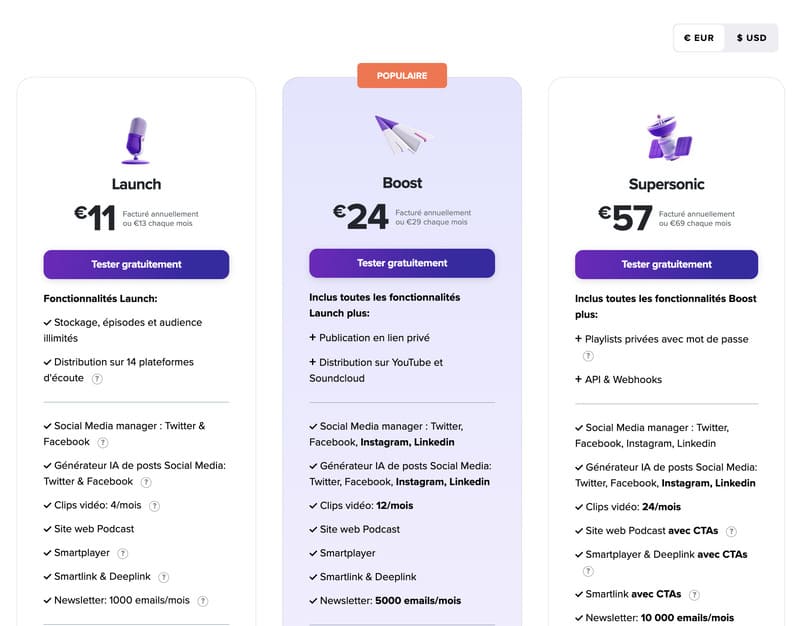
Ausha is positioned as an essential solution for hosting podcasts.
SEE MORE: Try Ausha Now
It offers an intuitive platform for managing, distributing, and promoting your podcasts. Its hosting feature includes unlimited storage and the ability to stream your episodes on 14 different platforms.
The pricing plans, tailored to a variety of needs, include options for detailed listener analytics and promotion tools to maximize the reach of your podcasts.
Simple & intuitive - you can start for free.

Buzzsprout is presented as a user-friendly podcast hosting platform that is ideal for beginners. It is easy to use, with a free plan to test its functionalities.
Buzzsprout
Buzzsprout is perfect for those entering the podcasting world thanks to its ease of use.
However, the limited storage in the free plan and the additional cost for overtime may be a constraint for more advanced users or users with greater needs.

Fusebox is a podcast hosting platform designed by podcaster Pat Flynn. It offers unique features to improve the integration of podcasts on websites. With advanced customization tools and an SEO-friendly transcription plugin, Fusebox stands out for its ease of use and flexibility.
Fusebox
Fusebox is ideal for podcasters who want a careful integration on their website, with excellent reader personalization. However, the view limits in the free plan and the cost for the Pro plan could be factors to consider for users with a large audience.

Transistor, launched in 2018, quickly established itself as a podcast hosting platform appreciated for its elegant interface and collaboration options. This platform makes it possible to create multiple podcasts at no additional cost, offering easy distribution on platforms such as Apple and Spotify, as well as robust analytics.
Transistor
Transistor is ideal for those looking for a platform that offers detailed analytics and the ability to manage multiple podcasts.
However, pricing can be a drag for newbies or smaller-scale podcasts.

PodBean, active for fifteen years, is a versatile podcast hosting and distribution platform, offering solutions adapted to all levels of podcasters.
Podbean
PodBean stands out for its customization capabilities and monetization options, making it appealing to podcasters of all levels. However, podcasters looking for more advanced features may need to opt for the paid plans.

Castos is distinguished by its unlimited podcast hosting offer, with no bandwidth or storage restrictions. Ideal for emerging creators, Castos also offers private podcasts for a small audience.
Try Castos
Castos is ideal for those looking for WordPress integration and effortless YouTube delivery, but professional publishing services can be an additional cost.

Captivate is presented as a podcasting platform focused on growth, combining stability and engagement tools.
Try Captivate
Captivate is ideal for podcasters looking for a stable platform with analytics and growth tools, but download limitations might be a disadvantage for some.

Spreaker stands out as an integrated platform for podcasters, offering tools for recording, managing, distributing, and monetizing podcasts.
Try Spreaker
Spreaker is particularly suited to professional podcasters and businesses, offering a comprehensive range of services for managing and monetizing podcasts.

Acast is positioned as a versatile platform for hosting, monetizing, and growing podcasts, offering advanced features to attract and engage audiences.
Try Acast
Acast is ideal for anyone looking for a comprehensive solution for growing and monetizing their podcasts, with a range of features for creators of all levels.

SoundCloud is positioned as a major audio hosting platform, focused on a social approach to connect podcasters and listeners.
Try SoundCloud
SoundCloud is ideal for podcasters looking to connect to a large audience and benefit from a platform that is both social and analytical.

Anchor is presented as an intuitive and completely free platform for creating and hosting podcasts. Acquired by Spotify, it offers a reliable and easy to access service.
Try Anchor
Anchor is ideal for podcasting beginners, offering a complete platform at no cost, backed by Spotify technology and resources.
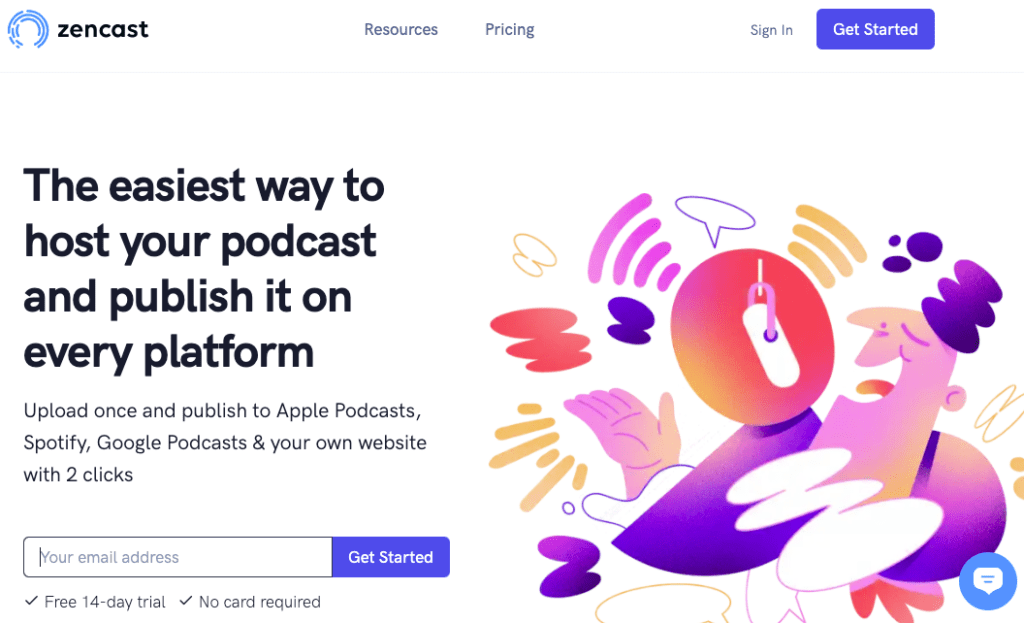
Zencast is presented as a platform of choice for the distribution of podcasts on various platforms. It offers unlimited hosting and downloads with no ads.
Try Zencast
Zencast is suitable for podcasters looking for a platform that is ad-free and offers advanced features for distribution and analytics.
To publish a podcast, after choosing a hosting platform, you will need to decide where your audience can find you. Here are the steps for publishing on the main platforms:
These directories allow you to reach a large audience and automatically update your feeds after each episode.
Starting a podcast is worth it if you have all the necessary and unique skills for podcasting. You need to be a great speaker, entertainer, self-promoter, digital marketer, and be ready to put a lot of time into marketing your podcast and building your audience.
If you started a podcast for the sole purpose of Make money online, there are simpler solutions, such as learning To create a blog. However, you can succeed, but the chances of success are very low.
The vast majority of podcasts are not successful because podcasters don't have the
Knowledge in digital marketing or relationship building skills to make them successful.
Yes, you can make money with a podcast, but you need to build an audience first. Once you've built an audience, you can't make money with sponsorships, affiliate marketing, and product sales.
The main way to make money with a podcast is by selling sponsorships (advertising slots) to businesses that want to be mentioned on your show. You can sell these slots in increments of 5, 10, 20, or even an entire year to make sure your slots are filled.
Another good way to earn money is to participate in affiliate programs. By naming a web page to visit on air and linking to it in the program notes, you can boost sales for other businesses and earn a commission.
The review of the best podcast hosting platforms convinced me that the noise around podcast hosting platforms is real - you just need to find what works for you to hit the right chord.
That said, podcasts require a lot of work, from naming to editing, storing, and monetizing.
The podcast hosting platform you invest in today can make a difference in your future success as a podcaster. So look at all aspects such as marketing, monetization, and support before choosing one.
If you have any other ideas or questions about the hosting platforms reviewed above, let me know in the comments. Please feel free to share this article.
Further reading: Check out my comprehensive guides to How to start a podcast and on the best software to create and edit a podcast to record and edit your shows.
You can also read my full review on Buzzsprout for more information.
And if you're looking to incorporate video into your monetization strategy, read my reviews on best online course platforms.





.avif)
.avif)