.svg)
Confused by IaaS, PaaS, and SaaS? Understand the differences and how each can help your business grow and scale effectively.

Artificial Intelligence (or AI) is a data science that studies how to make machines smarter with these algorithms by allowing them to perform tasks that traditionally required human intervention.
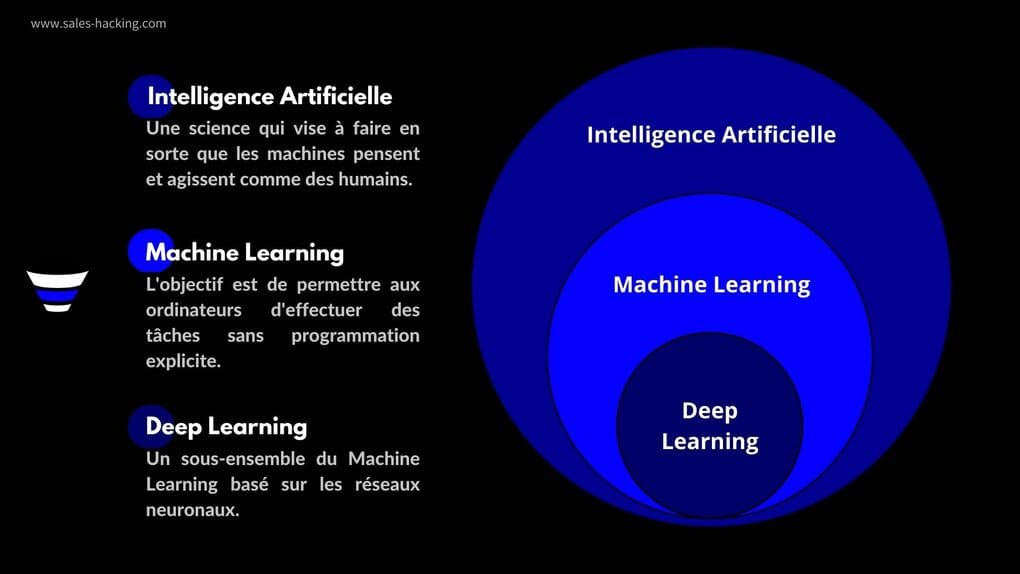
Deep Learning with Machine Learning are branches of AI (artificial intelligence) that aim to advance machine learning capabilities:

Artificial Intelligence is a field of science that consists in creating computer systems capable of carrying out complex tasks. This technology relies on algorithms and machine learning to make decisions and perform actions based on these criteria.
Indeed, AI is capable of analyzing and interpreting complex data, and is often used to automate business processes and facilitate the execution of repetitive tasks.
AI can also be applied to conversations to produce a natural interaction between the user and the machine and therefore to act like humans.
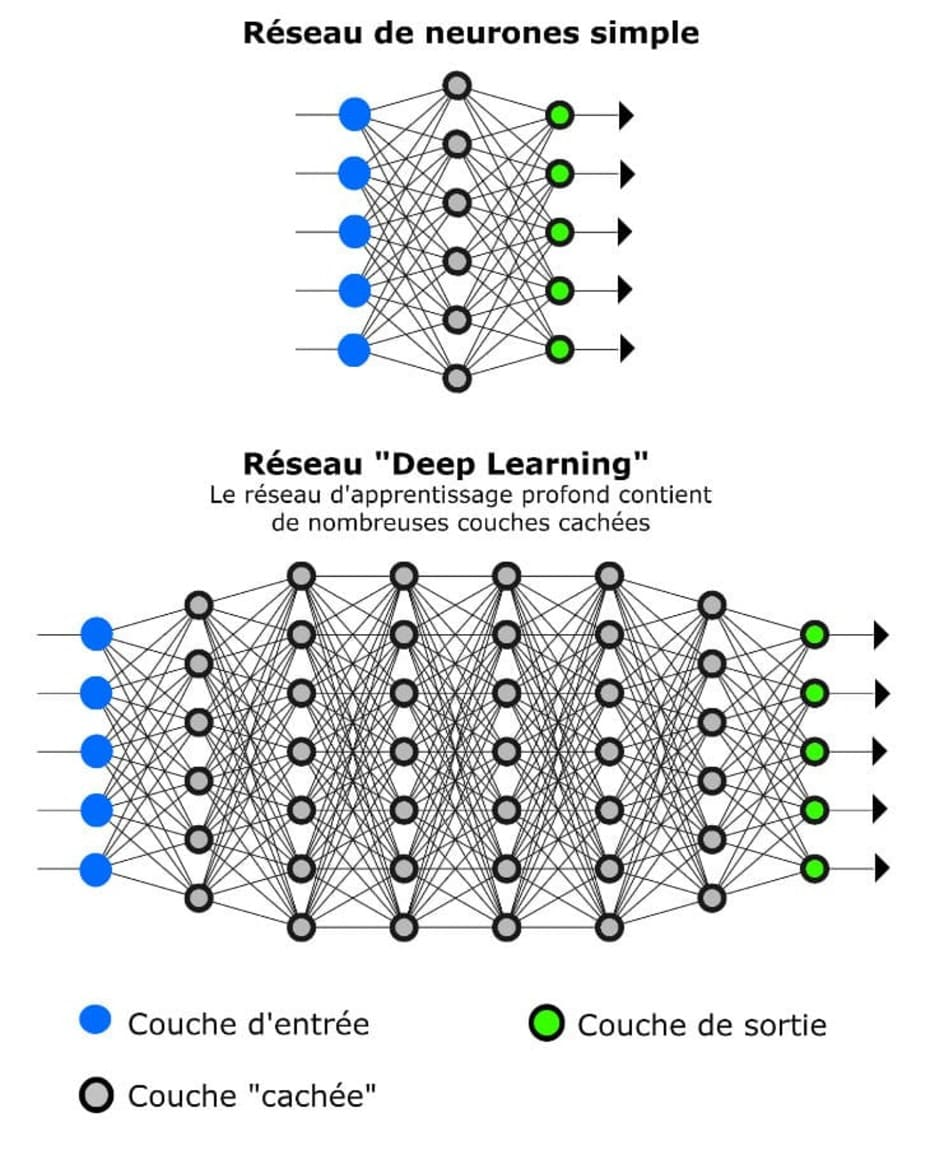
Deep learning is a subfield of artificial AI that uses deep neural networks to learn through data.
For example, these networks can be built from successive layers and trained with a wide variety of optimization methods, so that they can perform complex tasks such as image classification, natural language processing, and prediction.
To put it simply, deep neural networks are in fact self-learning algorithms, because they can integrate different types of data to produce accurate results that evolve as the data changes.

ML is a branch of Artificial Intelligence that allows computer systems to learn from present information.
It's this type of technology that relies on the use of algorithms to allow machines to solve complex problems without being directly programmed.
It is based on the identification and processing of data by the machine, then on the automatic generation of algorithms in order to find prediction models based on existing data volumes.
To do this, ML can be applied to various fields, such as faces, voice recognition or even products recommended by a website.
Artificial intelligence technologies can give you a big helping hand in your business, for example:
Technologies related to artificial intelligence are able to give you a big helping hand in your productivity, for example:
AI technologies can be used to automate & streamline business processes:
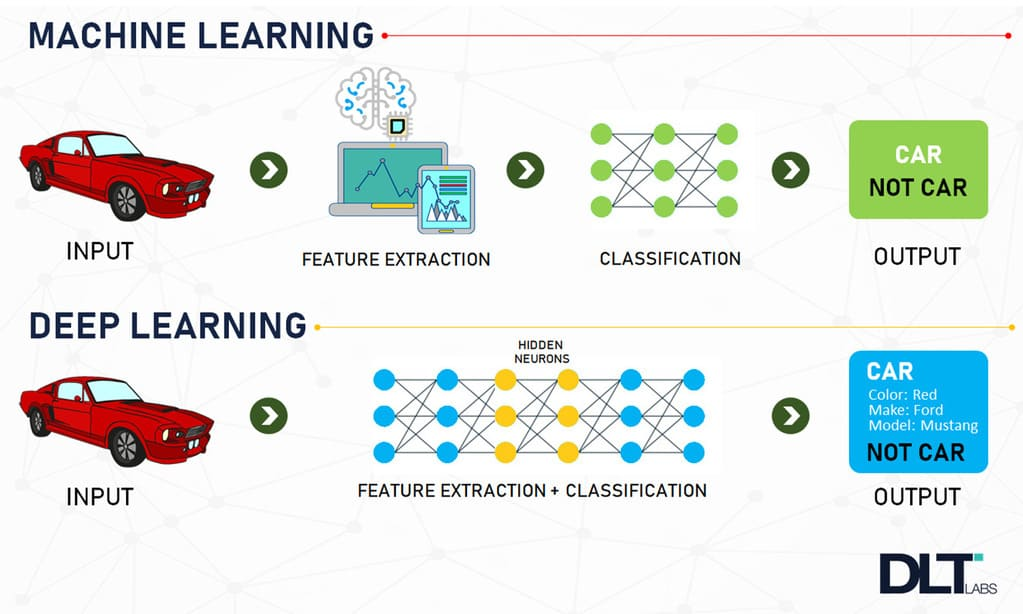
Both machine learning and deep learning are forms of artificial intelligence that can be used to solve complex problems. Although they are similar, they don't work exactly the same & offer different benefits.
Machine learning is a general machine learning method that can be used to solve many types of problems. It is able to analyze incoming data & identify related patterns. It can also be used to identify short-term trends that are useful for business decisions.
On the contrary, Deep Learning (DL) is a more advanced form of machine learning based on the use of deep neural networks or “Deep Nets.” These networks are capable of capturing complex links between different levels of abstraction in order to solve very specific & complex problems.
Choosing between Machine Learning & Deep Learning, you will need to assess your AI needs according to various criteria:
In other words, if you are looking for a very precise algorithm to handle a specific type of data, then DL would be the preferred solution.
Along with Geoffrey Hinton and Yoshua Bengio, LeCun is considered one of the “three musketeers” of deep learning in the world.

Like them, LeCun defended the idea that artificial neural networks that mimic a human being would allow computers to develop skills that could not be programmed manually.
It has met with strong resistance from the IT establishment, which has long considered the concept of artificial neural networks to be science fiction.
LeCun has “kind of carried the torch through the dark ages,” said Hinton at Wired in 2014.
LeCun is widely recognized for having advanced convolutional neural networks.

As early as the late 1980s, he proposed an architecture to build neural networks that would help computers recognize images used for facial recognition.
In 1994, while working for AT&T Bell Labs, he finally created a network that could identify handwritten characters. In 1998, banks were using this technology to read more than 10% of all checks in the United States.
Throughout the 1990s and 2000s, Le Cun continued to pioneer the use of CNN to recognize objects, including cars, animals, and human faces.

In 2019. The three pioneers of deep learning Yann LeCun, Geoffrey Hinton, and Yoshua Bengio received the Turing Prize in 2019, considered to be the “Nobel Prize in Computer Science.”
Note that Yoshua Bengio, a Montreal native, one of the world's top three AI experts, has chosen to continue his activities as a researcher, professor, businessman and committed citizen in the Quebec metropolis. It is partly responsible for the influence and appeal of Montreal as a “hub of profound intelligence,” with the largest academic AI community on the planet.
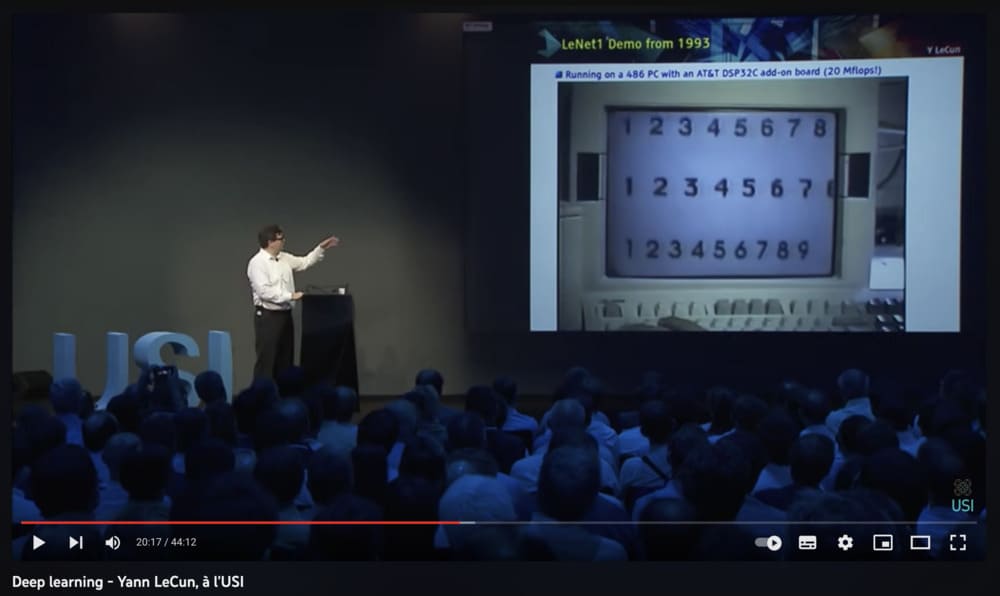
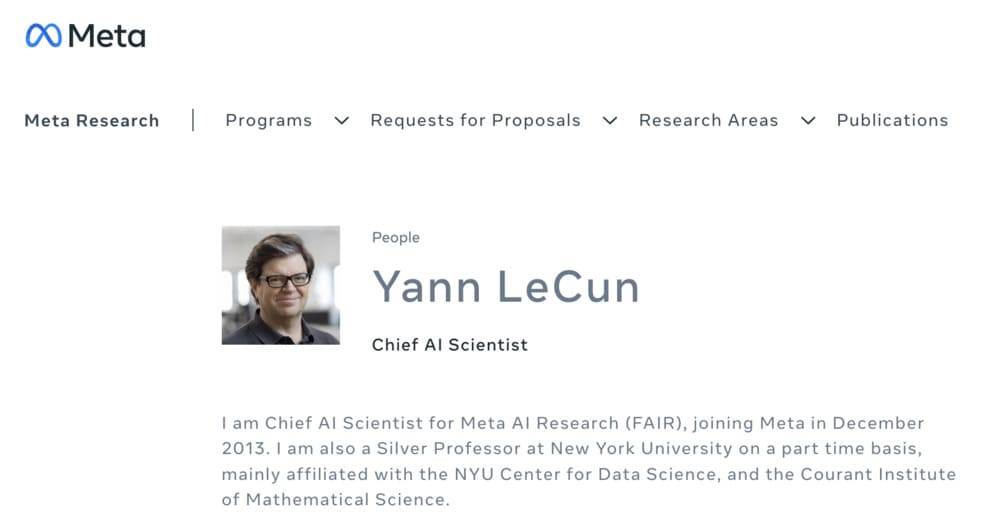
Since 2013, Yann LeCun is Chief AI Scientist for Facebook AI Research (FAIR) and globally today for the Meta group (Facebook, WhatsApp, Instagram, etc.).
He is also a part-time silver professor at New York University, primarily affiliated with the NYU Center for Data Science, and the Courant Institute of Mathematical Sciences.
Artificial intelligence (AI), machine learning (ML), and deep learning (DL) are complex technologies. AI automates decision-making processes through computer systems, while ML allows computers to make decisions with minimal human supervision by identifying patterns in data.
In contrast, DL is an advanced form of machine learning that aims to imitate human abilities in recognition and decision-making. The differences between these three technologies lie in the computing capabilities they use to achieve desired results.
Machine Learning (or machine learning) and deep learning (DL) allow computers to recognize patterns in large data sets.
These technologies have groundbreaking applications in many areas, such as cybersecurity and health. ML can detect anomalies and malicious intentions online, while DL is used in healthcare applications for analysis, diagnosis, and medical imaging treatments. DL solutions can be used to automate business operations.
Overall, ML/DL offers enormous opportunities to solve problems in many areas.
In conclusion, machine learning and deep learning are both types of artificial intelligence that are used to solve complex problems around the world. Their choice depends on the complexity of the problem to be solved and the resources available.
ML is easier to implement but doesn't require as much data as deep learning. Deep Learning, on the other hand, is very precise and can deal with specific problems thanks to a large analytical set.
In reality, the benefits and functionalities offered by ML and DL can help you improve your business and, in addition, provide you with a more effective solution to problems encountered around the world.