.svg)
Dive into global internet statistics and fascinating facts. Stay informed about the latest trends and how internet usage is evolving worldwide.

Around the world, more and more people are connecting to the web.
With 1.1 billion users, the China has the largest number of Internet users, followed by India (658 million) and the United States (307 million). In some countries such as Denmark or Iceland, almost the entire population is now online. The web is emerging as a global mass media.
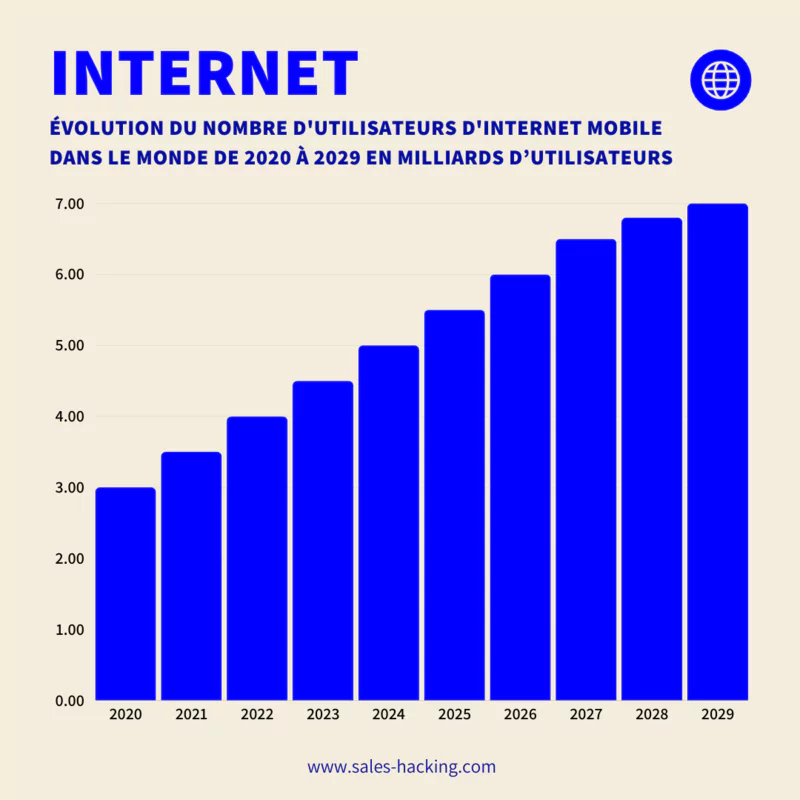
Mobile has revolutionized the way we consume the Internet.
Thanks to smartphones, Internet users can connect everywhere, all the time.
Result: they now pass more time on the web from their mobile phone than from their computer. This trend is particularly marked on social networks, where 4 minutes out of 5 are spent on a phone.
The mobile phone became the first screen in the various market shares.
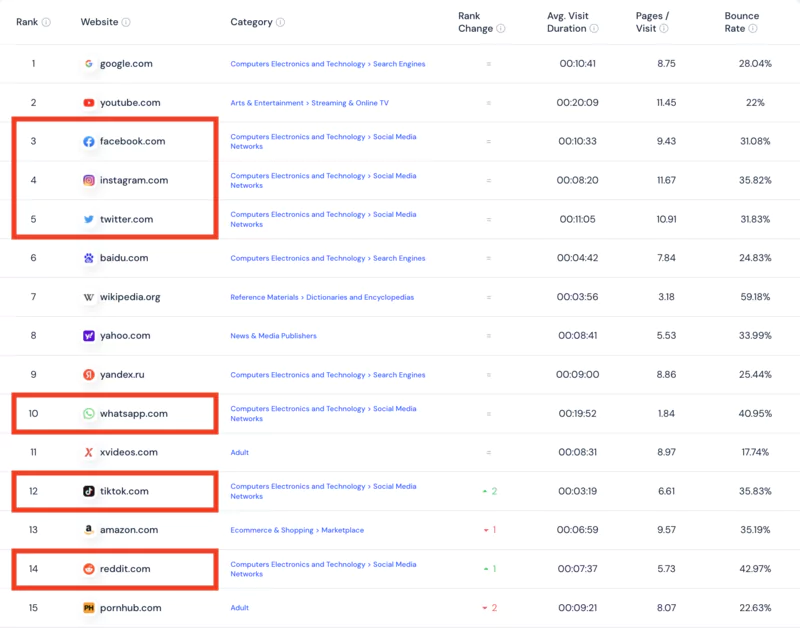
Communicate, get information, have fun... Social media has become the favorite playground for Internet users on PC, Mac or mobile phones.
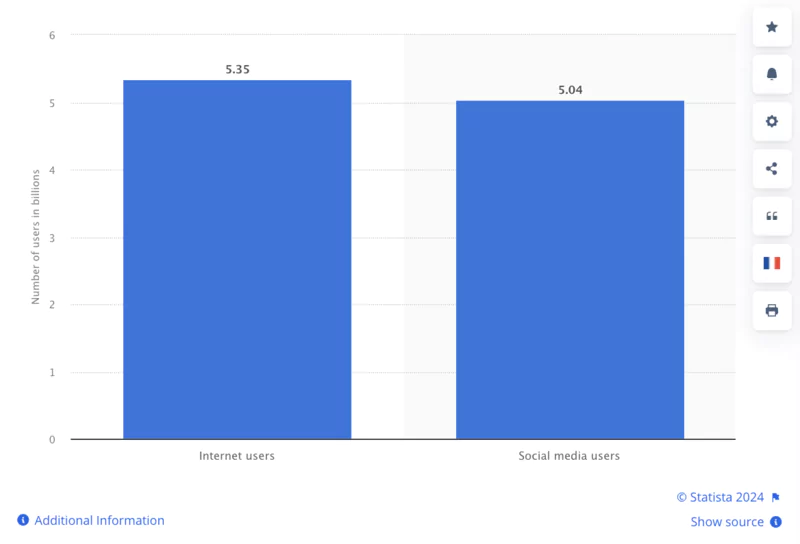
Each platform was able to find its audience, from teens addicted to TikTok on their mobile phones to professionals on LinkedIn to millennial fans of Instagram.
But all of them have a common point: a massive commitment and time spent on the part of users.
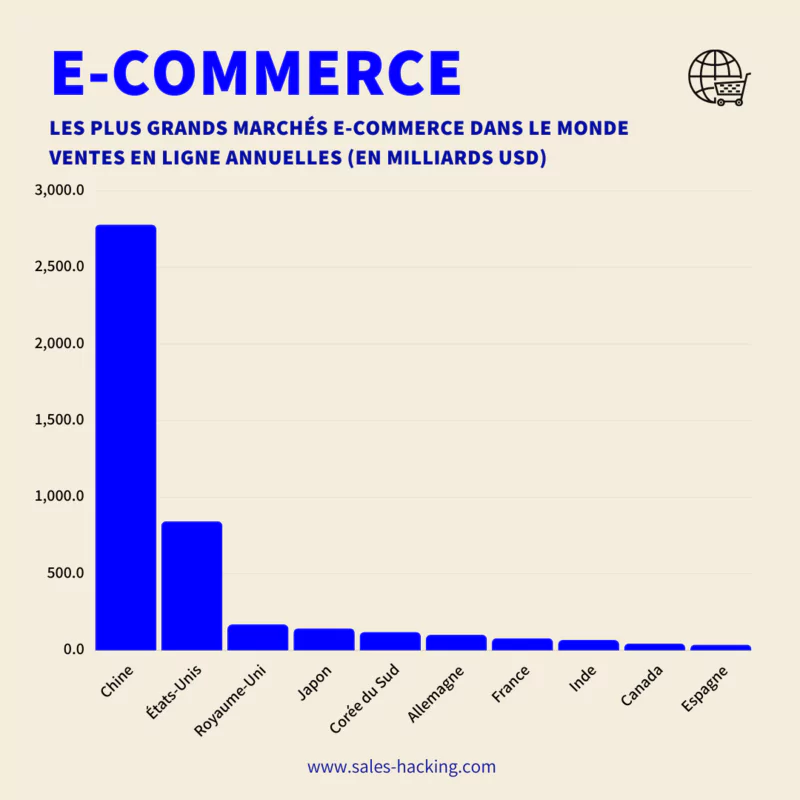
Shopping online has become a reflex for a growing part of the world's population.
Driven by giants like Amazon or Alibaba, e-commerce continues to grow at double digits from year to year.
While some obstacles persist, such as shipping costs, considered too high by 63% of American buyers, the underlying trend is clear: Commerce is digitizing at breakneck speed.
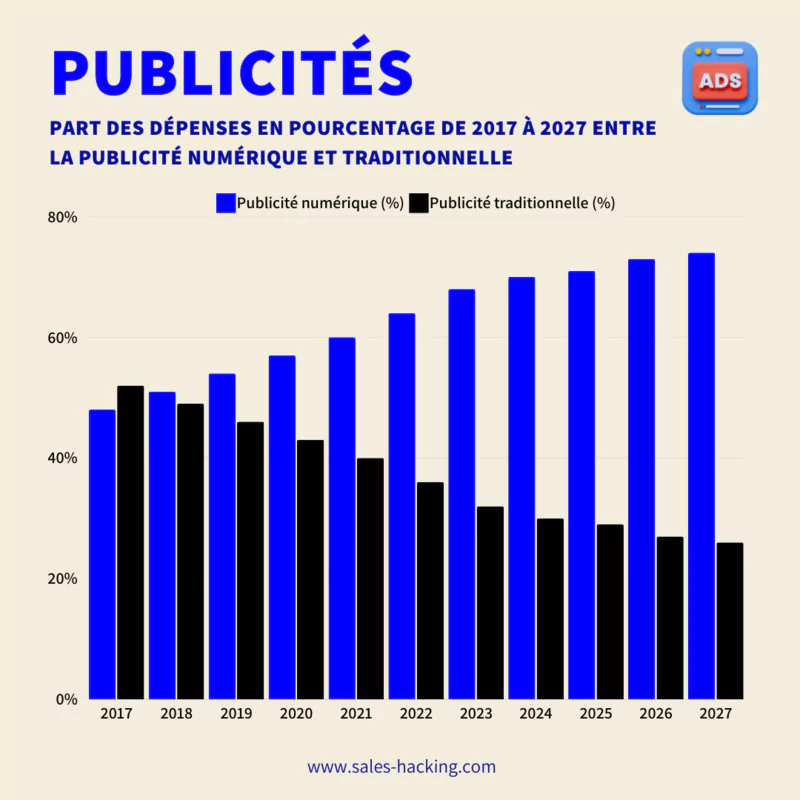
For a long time, advertising was the preserve of traditional media such as television or the press. But with the migration of audiences to digital, advertisers are following suit.
, digital advertising spending will exceed that of “traditional” media for the first time. A historic shift driven by platforms like Google and Facebook, but also by theThe rise of mobile advertising.
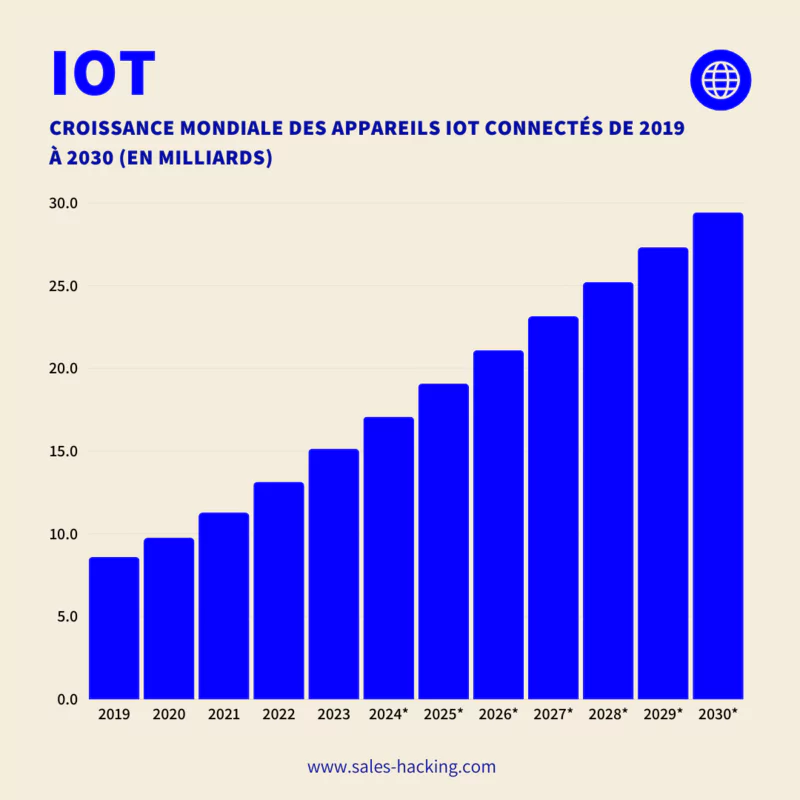
Watches, fridges, cars... More and more everyday objects are connecting to form the Internet of Things (IoT).
A booming market that is expected to weigh more than 1.3 trillion dollars in 2026, driven by the health sector and industry. In the future, these billions of sensors should generate an astronomical mass of data, opening the field to new and ever more personalized services.
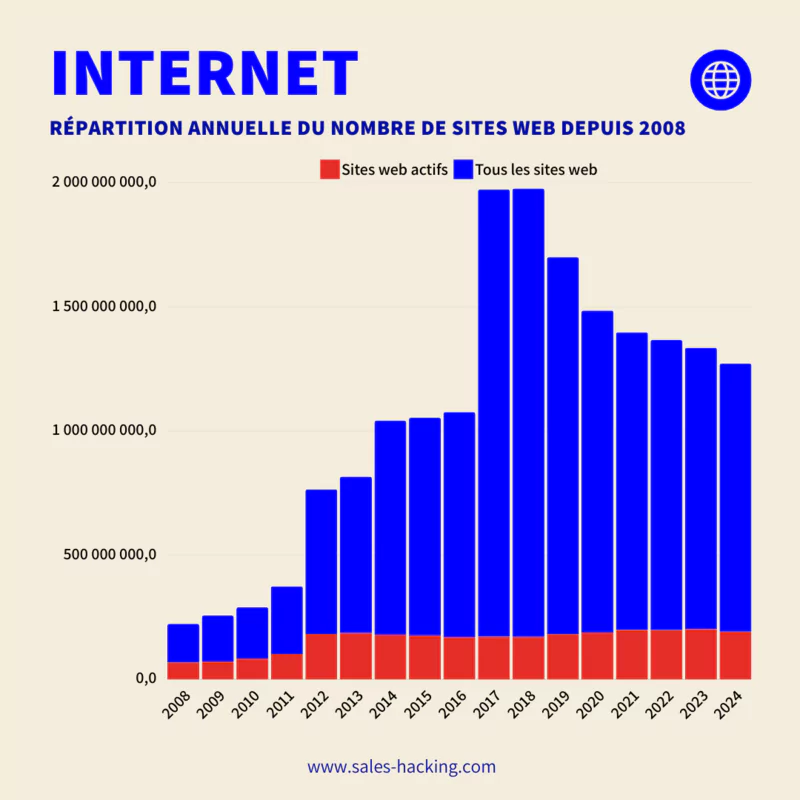
Despite fluctuations, the number of websites continues to grow overall.
While the gap between active and inactive sites is growing, the creation of new sites remains dynamic with nearly 4 million sites being created every day. But The competition is tough and many don't make it through the first few months.
An ecosystem in perpetual renewal.
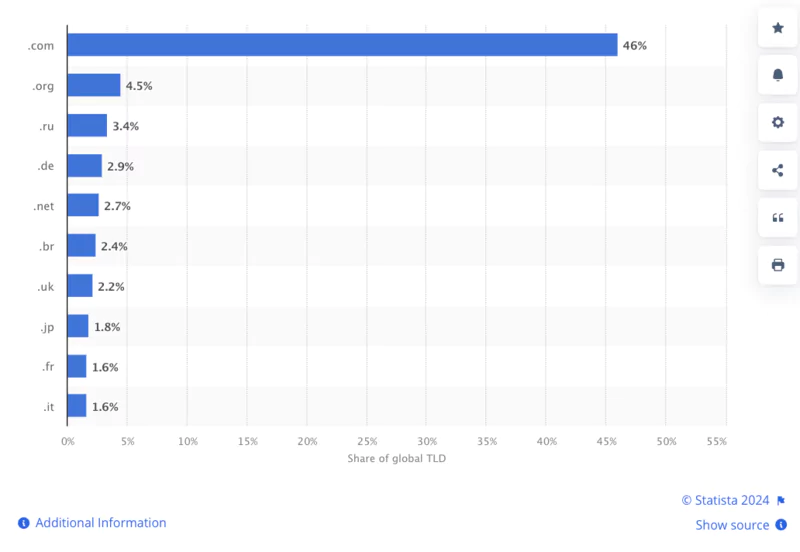
Far ahead of the others, the .com is establishing itself as the reference web extension in the world.
But in the segment of geographic extensions (ccTLDs), some countries are doing well, such as China, Germany or the United Kingdom. A sign of the vitality of their national digital ecosystem. Also to watch out for: the breakthrough of new generic extensions on recent sites.
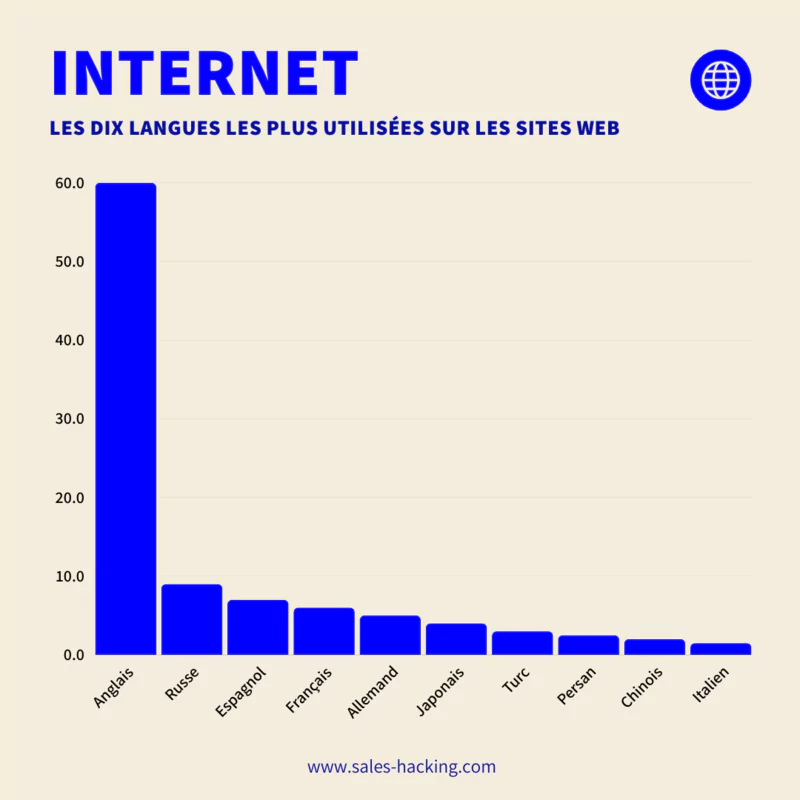
The overwhelming hegemony of English on the web is only a reflection of its status as an international language.
As the only lingua franca that can address a global audience, it has naturally established itself since the beginning of the web. But with the rise of Internet users from Emerging countries, the situation could change. Mandarin and Hindi, with a huge pool of speakers, have a card to play.
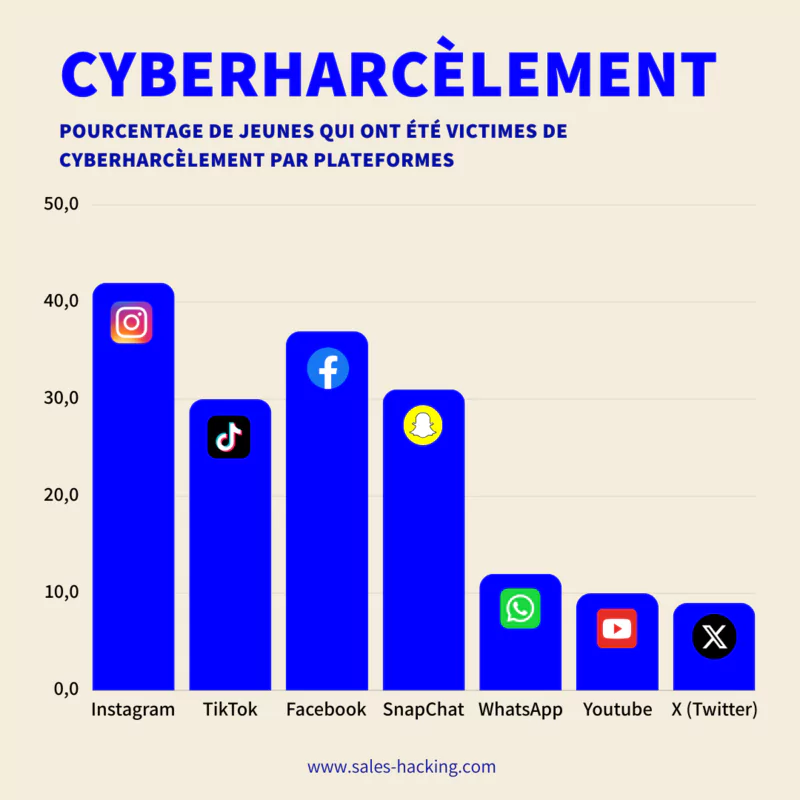
Behind the great opportunities of the Internet lies a darker side: cyberbullying.
From insults to physical threats to revenge porn, this scourge spares no category of the population, from teenagers to adults.
Social networks like Facebook or Instagram have become the favorite places for stalkers., taking advantage of the anonymity and virality allowed by these platforms. A major challenge to build a safer and more caring web.
Fixed broadband remains the main mode of accessing the Internet in the world, but mobile and alternative connections are gaining ground.
Mobile has become the first way to access the Internet in many emerging countries.
Alternative Internet connections, such as satellites or stratospheric balloons, are developing to connect remote areas.
Despite these advances, the digital divide remains a reality:
Google is the undisputed leader in search engines, its use represents an overwhelming market share of over 90%.
The Mountain View giant processes over 5 billion searches per day and indexes over 60 trillion web pages. Its dominance is explained by the relevance of its results, the speed of its responses and its refined interface.
Far behind, Bing and Yahoo have less than 10% of the market share. Bing processes around 900 million searches per day, while Yahoo processes nearly 500 million searches per day.
Faced with this dominance, alternative drivers are emerging and gaining in popularity:
The visible web represents only 5% of the total content of the Internet, with over 1.9 billion websites indexed by Google. Every day, more than 500,000 new websites are created.
By comparison, the Deep Web, which is not indexed by traditional search engines, accounts for over 90% of total Internet content. It is estimated that it contains more than 7.5 trillion web pages, a volume of data 500 times greater than that of the visible Web.
The Dark Web, on the other hand, would only represent a use of 0.01% of the total content of the Deep Web.
YouTube, the leader in video streaming, has over 2 billion active users per month.
Users watch over 1 billion hours of video per day on the platform, with 500 hours of video uploaded every minute.
Netflix, a paid streaming giant, has over 200 million subscribers worldwide.
In 2023, Netflix subscribers watched over 6.1 billion hours of content, while the platform spent $17 billion producing original content.
According to Cisco forecasts, video will represent 82% of global Internet traffic .
Internet video traffic has already increased by 65% in 2023 (TeleGeography), and the number of videos viewed on the Internet is expected to exceed 100 billion per day in 2026 (Ericsson).
Virtual assistants like Siri, Alexa, or Google Assistant are transforming the way we interact with the Internet.
Chatbots, automated conversational agents, are increasingly used by businesses for customer service.
According to Gartner, 85% of online interactions will be managed by AI in 2026.
The global AI market is expected to reach 190 billion dollars in 2026 (Markets and Markets), and 50% of businesses will use AI to personalize the customer experience by that time (Salesforce).
Facebook, the world's largest social network, has over 2.7 billion active monthly users.
According to the latest statistics, more than 50% of e-commerce transactions in the world are carried out from a smartphone or tablet.
, digital advertising accounts for more than 60% of global advertising spending, surpassing traditional media such as television and newspapers for the first time.
With these statistics, one thing is certain: The Internet has profoundly transformed our world and our daily lives. in the space of a few decades.
From social networks to e-commerce to advertising, digital technology has emerged as the new essential paradigm, challenging traditional players in the process.
But this digital revolution raises also numerous challenges.
How to ensure the security and confidentiality of data and the privacy of Internet users? How to fight against excesses such as cybercrime, cyberbullying or disinformation? What ethical framework should be defined in the face of advances in AI (artificial intelligence)?
Answering these questions will be essential to shape the internet of tomorrow.
An internet that is more inclusive, safer and at the service of the common good. This is the challenge of the coming years, to ensure that this great invention continues to be an opportunity for all of humanity.