Writing on a PDF: it's often that "simple" thing that quickly becomes frustrating... especially when you realize a PDF isn't like a Word document. There are many reasons why you might want to write on a PDF: correcting assignments, taking notes, approving documents, or even editing a university or educational course.
I've seen this many times: a student wants to fill out a form, a professional wants to correct two lines, and everything gets stuck because they don't have the right tool.
In this guide, you'll learn how to add text to a PDF, edit a PDF, annotate, fill and sign on Windows, Mac, and online — with super clear steps and what to choose based on your needs.
Understanding the Difference: Edit, Annotate, Fill
A PDF can be:
a "text" document (copyable)
a scan (image) → often requires OCR to make it editable
The easiest way to edit a PDF depends on the type of document: for a text PDF, adding or modifying is done directly, while a scan first requires an OCR step.
Here's the difference that avoids 90% of headaches:
The 2026 Error-Free Guide: Choosing the Right Editing Method
Need 🎯
Actual Action ✍️
Typical Tools 🧰
Pitfall to Avoid ⚠️
Add Text
You overlay a "text label" on top of the original.
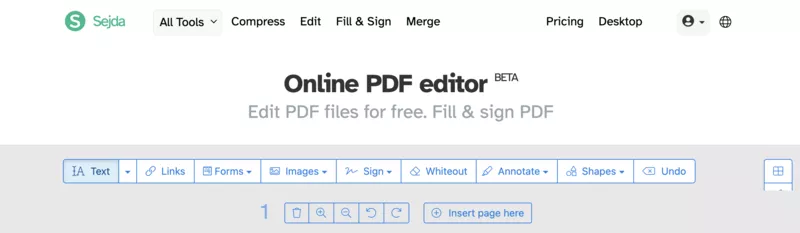
Edge, Preview (Mac), PDF24, Sejda.
The original text remains underneath; it doesn't adjust if you move your addition.
Edit Existing Text
You enter "into" the structure to change the existing letters.
Acrobat Pro, PDFFiller, PDFgear, Foxit, Nitro.
Guaranteed failure on a scanned document if you don't activate OCR first.
Fill a Form
You complete programmed interactive fields.
Acrobat Reader, DocHub, Fill & Sign.
If the fields aren't blue/clickable, you need to switch to "Add Text" mode.
Annotate / Comment
You add review layers (highlighting, arrows, notes).
Preview (Mac), Edge, PDF-XChange.
Annotations can be hidden or removed by the recipient's reading tool.
How to Add Text to a PDF File (The Easiest Method)
Windows (Without Installing Anything): Microsoft Edge
Edge allows you to add text, images, and shapes via the "Add notes" option.
Steps (Windows)
Open your PDF in Edge (double-click → Edge).
Click on Add notes (top bar).
Click on the page → type your text → adjust size/color if needed.
Click Save as (always keep a copy).
⚠️ Important Note: Depending on updates, some people experience text display bugs (line breaks, font). If this happens, avoid Edge for this file and switch to a dedicated editor.
When a PDF is passed around between several people, the risk is always the same: 10 different versions and no one knows which one is correct. The good news is, today you can work together on a PDF without any hassle, especially thanks to online tools.
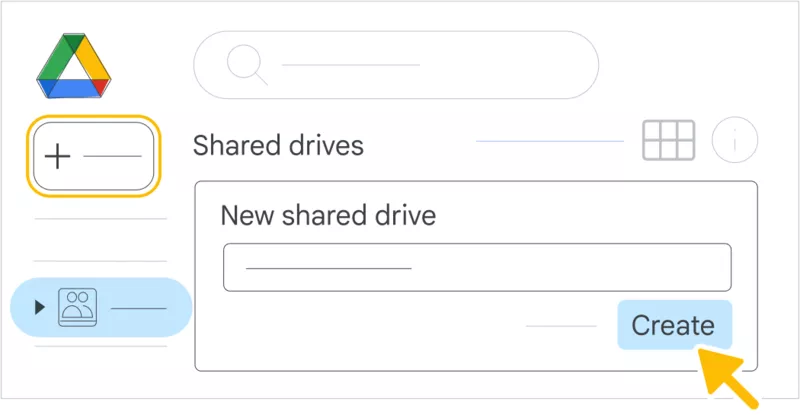
The idea is simple: you put the file in a shared space, and then everyone adds their feedback with comments, annotations, or notes. Google Drive is often the most convenient for this: quick sharing, access from any device, and clear tracking of feedback.
If you want to go further (approval, layout, centralized feedback), platforms like Canva or Smallpdf make teamwork smoother: sharing, notes, version management… everything is designed to avoid unnecessary back-and-forth. The result: you save time, everyone is on the same page, and the PDF progresses without chaos.
Using Google Drive to Edit and Share PDFs
Google Drive is like the perfect "plan B" when you want to manage a PDF quickly and neatly, without installing anything. You upload your file, open it directly, and you can already do quite a bit: comment, add feedback, and especially share it in just a few seconds.
If you need to make more significant changes, the trick is to convert the PDF into Google Docs to rework the content like a regular document (handy for correcting text, adjusting paragraphs, or applying simple formatting). Then, you can neatly re-export it as a PDF.
The big advantage is sharing: you choose who can just read, who can comment, and who can edit. This avoids mistakes, centralizes everything in one place, and you maintain clear control over your document.
Managing Multiple PDF Files at Once: Tips and Tools
When you need to handle multiple PDFs at once (invoices, files, courses, client documents), the problem isn't the PDF itself… it's the repetition. Merging, splitting, converting, renaming: you can quickly lose 45 minutes on "simple" tasks.
Here, tools that manage batch processing really make a difference. Smallpdf, for example, is handy for doing things in sequence: merging, splitting, batch conversion, compression… without repeating the same steps 20 times. Canva can also help if your PDFs are mainly visual documents (presentations, materials, pages to edit), with a super simple interface to keep things on track.
The smart move: group your files, perform operations in series, then save with clear names. You reduce errors, work faster, and maintain a tidy organization — even with a lot of documents.
FAQ
Can I write on a PDF without paid software?
✅ Yes, absolutely! Use Sejda, iLovePDF, HiPDF, or PDFGear online. All free and efficient.
Does Adobe Reader allow me to edit a PDF?
⚠️ Partially. Free reader = fill out forms + annotations. Full edition = Acrobat Pro (paid) or alternatives: UPDF, PDFelement.
How do I save edited PDF?
After editing: Click “Download” (or “Export”) → Choose location → Or save Google Drive/OneDrive directly.
Can I edit PDF on the phone?
✅ Yes! Install Sejda, PDFGear or iLovePDF from the app store, edit like on a computer.
How do I fill out a non-interactive PDF form?
Use “Add Text”: Download PDF → Click “Add Text” → Place text boxes → Type data.
How do I sign PDF legally?
Use certified tool (iLovePDF Signature, Sign.com, Adobe). Legally valid electronic signatures (eIDAS Europe standard). Some documents (will, notarial contracts) = advanced certified signature.
How do I edit scanned PDF (image)?
Use OCR: Google Drive → Open with Google Docs (free) | Adobe Acrobat OCR (7d free) | PDFelement OCR (free trial).


.svg)