.svg)
Discover the best PLM software to optimize product lifecycle management and improve productivity and collaboration

Product lifecycle management (PLM) software is a tool that allows you to track and manage all the stages of a product's life, from its conception to its disposal.
It centralizes all data relating to the product and facilitates sharing and collaboration between the various actors involved in its development.
Here is my ranking of the best management software of the product life cycle (PLM):

Siemens Teamcenter X is a flexible and scalable PLM solution that is suitable for businesses of all sizes and sectors. With its specialized modules and open architecture, Teamcenter X makes it possible to effectively manage the entire product lifecycle.

❤️ Our Take : Teamcenter is establishing itself as the reference brand for PLM solutions. Powerful and flexible, it brilliantly orchestrates the management of the life cycle of the most complex products.
👍 Pros : Extensive features. Adaptable modular architecture. Extensive integration with CAD. Extensive support and ecosystem.
👎 Cons : Long and expensive deployment. Steep learning curve. Requires significant IT resources.
LEARN MORE: Check out the Teamcenter website

Jama Connect is a PLM platform specialized in requirements management and product traceability, particularly suited to regulated sectors such as aeronautics, defense and medical.
Its capabilities for capturing, validating, and monitoring requirements ensure compliance and product quality throughout their life cycle.

❤️ Our Take : Jama Connect is shaking up the codes of PLM with its agile approach. Focused on collaboration, it streamlines the management of requirements and tests.
👍 Pros : Agile production oriented. Powerful on requirements and tests. Modern interface. Fast deployment.
👎 Cons : Less suitable for complex products. Limited CAD features. Needs a change in culture.
LEARN MORE: Check out the Jama Connect website

Developed by PTC, Windchill is a unified PLM platform that covers the entire product lifecycle, from design to after-sales service.
Windchill offers advanced data, process, and collaboration management capabilities, and allows businesses to accelerate innovation and reduce time to market.

❤️ Our Take : Windchill is designed for large-scale PLM deployments. Robust and secure, it guarantees optimal management of products on a large scale.
👍 Pros : Powerful product data management. Integrated CAD modeler. Granular security and access control. Support for large deployments.
👎 Cons : Complex to implement. Requires a substantial infrastructure. High costs. Ergonomics that can be improved.
LEARN MORE: Check out the Windchill website

Bamboo Rose is a PLM (Product Lifecycle Management) platform specialized for retail and consumer goods companies.
Offering features to manage collections, suppliers and quality, Bamboo Rose helps brands develop their products, optimize their sourcing and meet time-to-market deadlines.

❤️ Our Take : Bamboo Rose is the PLM solution of choice for the retail industry. Its dedicated cloud accelerates tasks, sourcing and the marketing of collections.
👍 Pros : Designed for retail challenges. Intuitive cloud platform. Integrates sourcing and purchasing. Facilitates supplier collaboration.
👎 Cons : Rather limited outside the retail sector. Some advanced features are missing. Basic CAD integrations.
LEARN MORE: Check out the Bamboo Rose website

Centric Retail PLM is a cutting-edge PLM solution, specifically designed for fashion, luxury, and retail businesses. This solution allows brands to create innovative and quality products, while respecting deadlines and budgets.

❤️ Our Take : Centric Retail PLM elegantly dresses the collection management of fashion players. From concept stores to e-commerce, there is never a shortage of current trends.
👍 Pros : Made for the fashion industry. Optimized collection workflows. Trendy and mobile interface. Good grip.
👎 Cons : Not suitable for retail or textile use. Limited customization options. Uneven international support.
LEARN MORE: Check out the Centric Retail PLM website
Oracle Agile PLM is a robust and proven product lifecycle management (PLM) solution.
It helps businesses optimize product development, improve collaboration between teams, and accelerate innovation. With its comprehensive capabilities and tight integration with other Oracle applications, Agile PLM provides a solid foundation to support growth and strengthen business competitiveness.

❤️ Our Take: Agile PLM brilliantly combines the robustness of Oracle and the flexibility of Agile. Integrated and customizable, it accelerates the marketing of complex products.
👍 Pros : Relies on the power of Oracle. Covers the entire product life cycle Extensive integration. Very customizable.
👎 Cons : Fairly long deployment. Requires Oracle skills. Expensive to scale. Ancient ergonomics.
LEARN MORE: Check out the Oracle Agile PLM website

SAP PLM is a comprehensive, integrated solution that allows businesses to effectively manage the entire lifecycle of their products. Closely connected to other SAP applications, the PLM solution provides a unified view of product data and processes, promoting collaboration, innovation, and compliance.

❤️ Our Take : SAP PLM integrates seamlessly into the SAP ecosystem. Connected and comprehensive, it simplifies end-to-end product lifecycle management.
👍 Pros : Fully integrated with SAP. Covers all aspects of PLM. Adapted to international deployments. SAP support.
👎 Cons : Requires an SAP ecosystem. Austere ergonomics. Conditioned to SAP updates. Quite expensive.
LEARN MORE: Check out the SAP PLM website

Autodesk Fusion is an integrated cloud platform that combines CAD design, simulation, manufacturing, and product data management. With its powerful and collaborative tools, Fusion 360 allows teams to design, test, and manufacture innovative products, while providing a unified view of data and processes.

❤️ Our Take : Fusion is reinventing PLM by putting 3D design at the center. Intuitive and cloud-based, it streamlines collaboration around CAD data.
👍 Pros : Focused on 3D CAD. Intuitive CAD interface. Runs on the cloud. Affordable for a startup.
👎 Cons : Less suitable except for mechanics. Lack of advanced PLM features. Little customization.
LEARN MORE: Check out the Autodesk Fusion website
When choosing PLM software, it is crucial to ensure that it has the functionalities needed to specifically meet the specific needs of your business.
Here are the key characteristics to consider:
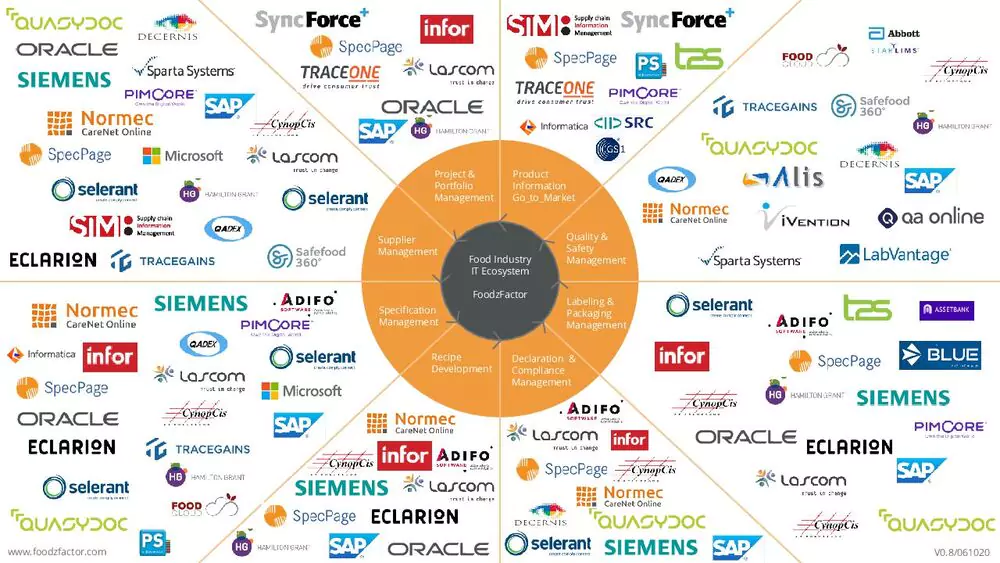
Good Product Lifecycle Management (PLM) software should offer a balanced combination of security, lifecycle management, collaboration, automation, and integration capabilities.
Product lifecycle management (PLM) software is used by many businesses, regardless of size, to optimize product development.
Among this set of the main users, we find as roles:
These businesses choose PLM solutions for a variety of reasons, including increasing productivity, improving customer experiences, gaining competitive advantage, and reducing risks while ensuring product service quality.
A PLM tool allows you tosignificantly increase productivity thanks to:
Result : teams can respond more quickly to market demands and satisfy customers.
With PLM software, you centralize all product data, allowing you to better respond to customer questions and requests, regardless of the country or the communication channel used.
This unique database also facilitates stock management and order tracking, for on-time deliveries. By automating the maintenance of product documentation, you ensure optimal customer experience.
Faced with an ultra-competitive market, a PLM tool offers a strategic advantage considerable in decision-making:
With a PLM, you are armed to respond quickly and effectively to market requirements.
PLM software allows you to minimize risks inherent to the development of new products:
Result : you bring safe and high-quality products to the market, while optimizing research and development (R&D) time and costs
A PLM tool offers many other benefits:
PLM software is a strategic asset for any company wishing to optimize the development of its products. By centralizing information, by facilitating processes, it makes it possible to gain in productivity, reduce risks and improve quality, for a certain competitive advantage and an optimized customer experience.
All of these PLM solutions help you connect your team, processes, and data across the entire product lifecycle in a single dashboard.
In the end, the software you choose depends on the maintenance needs of your business, the number of users, activity, budget, special expectations of your specifications, etc.
All things considered, the best product lifecycle management (PLM) software is Teamcenter Siemens.
This tool offers all the features you need in a PLM software, including bill of materials management, EDM, publishing, visualization, digital models, etc.





%252520(1).avif)

.avif)