Customer Relationship Management (CRM) has become a priority for many businesses. Customers are demanding more service and experience than ever, and businesses need to find ways to meet these demands. With that in mind, let's take a look at some of the most current statistics about CRM and the impact it can have on businesses.
Market size
The global customer relationship management market was valued at $52.64 billion in 2020. Fortune Business Insights
By 2028, CRM technology is expected to be worth around $128.97 billion worldwide.
Usage Rate
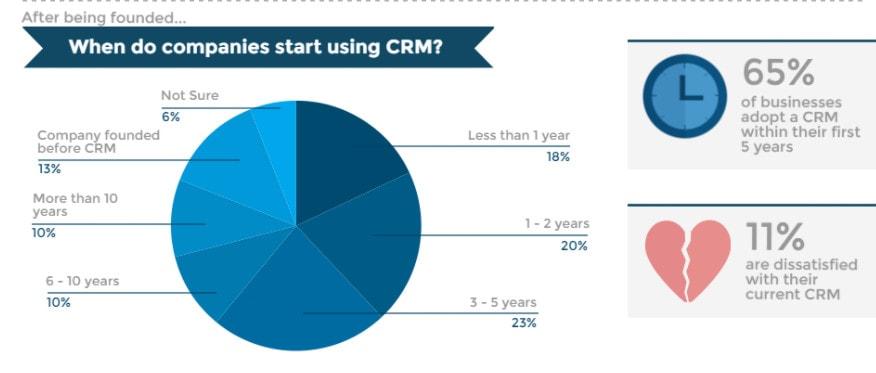
Businesses want to improve their relationships with customers as quickly as possible, and they often invest in CRM within the first five years of starting a business. Dynamic Consultants
When technology is implemented in the business, it is used approximately 80% by sales teams, 46% by marketing, and 45% by customer service. Zendesk
Over 91% of businesses with 10 or more employees use CRM to manage customer conversations. Grand View Research and Nucleus
Return on investment
In 2014, Nucleus Research revealed an average of $8.71 in returns for every dollar spent.
In 2021, Dynamic Consultants estimated that this figure may have increased to an average of around $30.48 for every dollar spent.
Demand trends
Around 64% of customers started using a new channel for customer service in 2020, and they increasingly want consistent experiences across platforms.
80% of businesses said they would need to make changes to their assistive technology in 2020, including adding new features and capabilities to their CRM software.
Importance of customer experience
CRM software is a tool dedicated to significantly improving the customer experience.
Around 68% of marketers say their business is increasingly competing with the customer experience first and foremost. Salesforce
At the end of the day, it's clear that CRM is a growing field and is increasingly important for businesses looking to remain competitive in today's marketplace. Businesses need to be ready to invest in technology and use data to improve customer experiences and strengthen long-term customer relationships.
CRM adoption statistics
Customer Relationship Management (CRM) has become a necessity for businesses looking to provide superior customer experiences.
CRM technology allows businesses to collect, store, and analyze customer data to improve customer interactions and relationships.
In this text, we will explore some recent statistics on customer relationship management.
Impact on businesses
64% of businesses consider CRM technology to have a significant or very significant impact. LinkedIn
Sales teams using CRMs have 17% higher job satisfaction.
Adoption rate
Around 22% of salespeople don't know what a CRM is. HubSpot
40% of businesses don't use CRM at all.
Most requested functions
The most requested functions among CRM software are contact management, interaction tracking, scheduling and reminder functions, and pipeline tracking. Software Advice
Customers also mention features like central databases, sales automation, and email marketing integrations.
Salesforce dominates the market
Salesforce has more than 20% of the global CRM market. Spring Engage
Salesforce is growing revenue at a rate of 23.2% per year.
Importance for the customer experience
Around 50% of teams use data to make accurate forecasts. Salesforce
The most successful sales teams are more likely to base their forecasts on data-driven insights.
Importance for storing customer information
Around 92% of teams are already using databases to store customer information. GDMA and Winterberry Group
However, many businesses still don't have a reliable way to manage this information. Zendesk
Use for sales and process automation
Around 82% of the companies surveyed say they use their CRM systems for sales reporting and process automation. Grandview
Corporate executives are also relying more heavily on CRM software to process actionable customer data.
In short, customer relationship management is essential for businesses seeking to provide a superior customer experience. While many businesses are already using CRM technology, there is still a long way to go for all businesses to adopt it.
Benefits of CRMs
Customer Relationship Management (CRM) has become an integral part of most modern businesses.
Businesses are looking to better understand their customers and build meaningful relationships with them.
Improved access to customer data
Around 72% of businesses say that using a CRM gives them access to better customer data, allowing better relationship management and better monitoring of interactions.
Additionally, 74% of businesses believe that CRM technology allows better access to customer data. Resco.net
Increased productivity
The improved data accessibility offered by CRM technology can reduce sales cycle complexity by an average of 8 to 14%. Nucleus
CRM decision makers also say they benefit from a 14.6% increase in productivity when using social and mobile CRM.
Sales improvement
CRM software can improve sales by up to 29%, while improving sales forecasting accuracy by up to 32% and sales productivity by 39%. Salesforce
The result is better business results across the board.
Importance of CRM technology
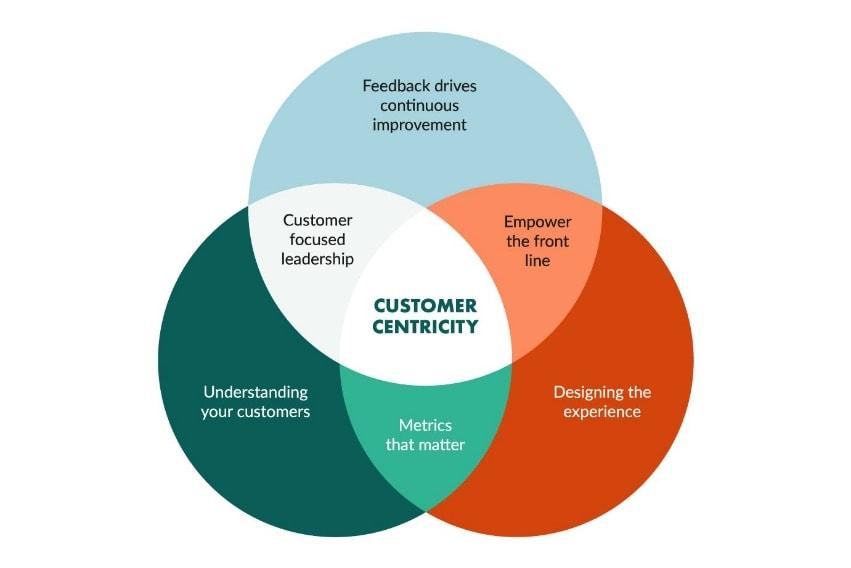
Around 92% of businesses believe CRM technology is critical to achieving their “customer-centric” goal and building more meaningful brand relationships. Super Office
Improved customer satisfaction
Around 47% of CRM users say that CRM technology has a massive impact on their customer satisfaction rate. Capterra
Social media monitoring and prospecting tools are also among the most sought after features to obtain the best results with CRM.
Priority to CRM activities
75% of businesses believe it is increasingly important to close more deals for their teams
48% want to improve the efficiency of sales funnels.
69% say they want to turn more contacts into customers
33% say increasing revenue from existing customers is a priority HubSpot
Evolution of technology
Customer relationship management is essential for any business that wants to maintain and develop its customer base.
CRM (Customer Relationship Management) technology is increasingly being used to improve this management. Here are some recent statistics that demonstrate the increasing importance of CRM software for businesses.
Around 81% of marketers use their CRM from multiple devices. OnePage Express
By 2026, the size of the CRM cloud market is expected to reach a value of around $34.5 billion, with Salesforce, Microsoft, Adobe, SAP, and Oracle topping the rankings of the industry's top providers. Appsruntheworld
Around one in four customers interact with their favorite brands on social media, paving the way for more CRMs with social technology. GWI
Interest in AI (Artificial Intelligence) CRM is growing rapidly, with more businesses interested in tools that can help them manage more complex data. Aimultiple
CRM software continues to develop to meet the customer relationship management needs of businesses.
With the rise of mobile devices, the cloud, and AI, it's clear that CRM software will continue to play a crucial role in optimizing customer relationships.
Technology and customer experience statistics
Monitoring omnichannel experiences
Around 68% of customers say it's important for customer service agents to know their service history, which CRM can offer them.
73% of customers say they are likely to change brands if the service is not consistent Salesforce
Reducing customer data silos
Around 52% of businesses see CRM technology as a way to reduce silos between teams in the workplace. Super Office
39% of teams want to overcome a culture that isn't aligned with customer needs, and 35% cite the lack of platforms for managing data.
Customer loyalty
52% of loyal customers will go above and beyond to buy from their favorite brands, even if that means spending more. Zendesk
Personalized experiences drive loyalty.
Accelerating demand
88% of service teams found gaps in their technology solutions (including CRM software) during the pandemic. Salesforce
77% of agents also say their work is more strategic and requires more data than two years ago.
81% of decision makers are accelerating their digital initiatives in the wake of the pandemic.
Impact on customer satisfaction and retention
47% of users surveyed said that customer satisfaction and retention improved significantly when using CRM. Capterra
CRM users also saw a 45 percent increase in revenue, and a 39 percent improvement in cross-selling and upselling success.
In conclusion, these statistics show that CRM software has a significant impact on customer satisfaction and retention, reducing silos between teams, and adapting to rapid changes in the business environment.
By using CRM technology, businesses can access more accurate customer data and improve productivity, which can lead to a significant increase in sales and better overall business performance.
Summary
To say that you have a lot of information in terms of CRM statistics would be an understatement.
But with all of this data, you should be able to make an informed decision about investing in CRM and pave the way for a seamless business experience.
Now let's move on to the next steps. Thanks to our buying guide on best CRM software, you can get a bit more information about how to choose and how much this software will cost your business.
.svg)











.webp)