.svg)
Discover the top 5 web page translators to easily translate your website and reach a global audience. A complete guide for seamless translation.

Translating your website can significantly improve your online presence. Here are the main benefits of this approach:
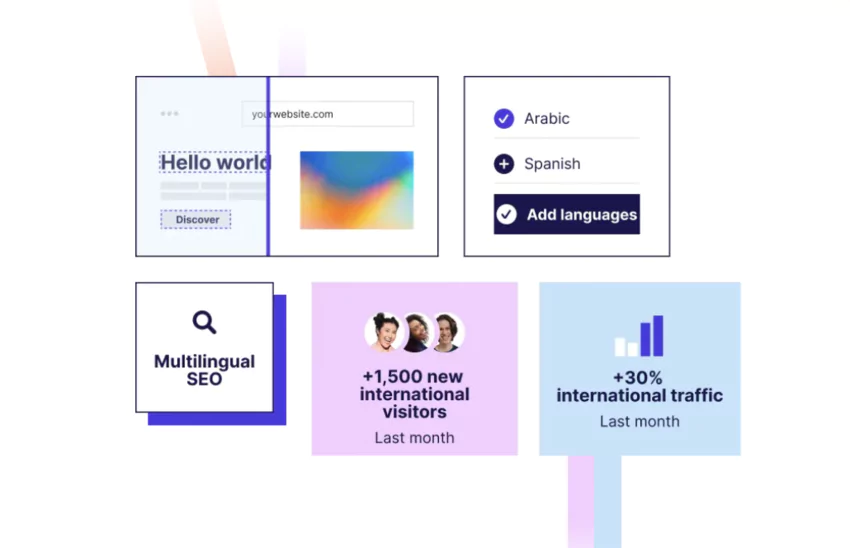
A multilingual site attracts the attention of international search engines. This means that your site will appear in search results in different countries, thus increasing your visibility on a global scale.
The numbers speak for themselves:
This dramatic increase in your potential audience can have a significant impact on your web traffic and, therefore, on your business opportunities.

Language plays a crucial role in online shopping behavior. An eye-opening study shows that 72.4% of consumers spend more time on websites in their native language. This number highlights the importance of speaking the language of your potential customers.
A translated site allows you to:

Websites offer better experiences for non-native visitors. This results in several advantages:
By offering content in the language of your visitors, you create a welcoming environment that encourages them to further explore your site and engage with your brand.
Translating your website is not just a matter of language. It is a strategic investment that can open new doors for your business on the international scene.
There are several ways to translate your website. Each method has its advantages, depending on your needs and your budget. Here is an overview of the most common options.

Human translation remains unbeatable for accuracy. A professional understands the nuances of your brand. It includes humor and style. It's expensive, but for critical content, it's well worth the investment.
For a quick and economical solution, online tools like Google Translate are very useful. They have made huge progress in recent years. However, be careful with complex texts. The results can sometimes be surprising.

Translation widgets are a great option for integrating translation widgets on your site. Simple to install, this type of translator allows your visitors to translate web pages themselves. Here are their main benefits:
However, note that the quality may vary between languages (English, French, Spanish, German, etc.)
The web browser extensions work in a similar way to widgets. The main difference? It is the user who installs them. You don't have to make any changes to your site.

AI (artificial intelligence) has revolutionized machine translation with tools like DeepL, Microsoft Translator or even ChatGPT offer impressive results. They are more accurate than basic translators and understand the context better to adapt the answers to your case. Human proofreading is still recommended, but the basic result is often of very good quality.
The choice of method depends on your specific needs and budget. The end goal remains the same: to make your page accessible to a wider international audience.
Translation tools fall into several categories. Here is an overview of the most popular ones, ranked by type and use.

The choice of tool depends on your specific needs:
Each tool has its strengths. Some excel in precision, others in ease of use. Evaluate your priorities - quality, speed, integration - and choose the one that best fits your needs.
Whether you are new to web development or an experienced user, this guide will show you step-by-step how to integrate a translator into your site. Follow these easy steps to make your content accessible to a global audience.

Before you get started, you need to decide which integration method is best for your site. Here are the most common options:
Select the technique that best suits your skills and the requirements of your website.
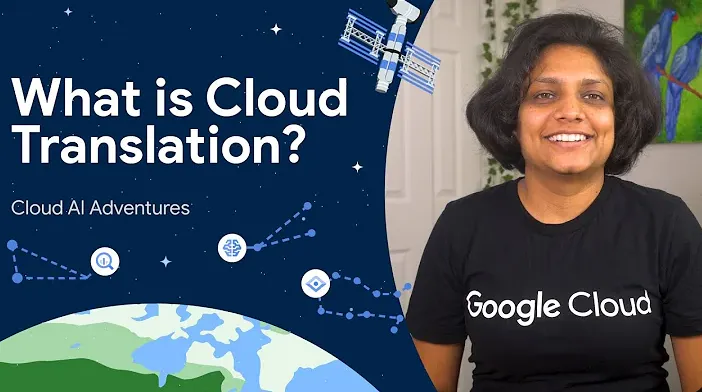
If you're going for a Google translation widget, Google Translate is a popular and easy option to set up.
tip : If you are not comfortable with HTML code, ask for help from your web developer or the technical support of your hosting platform.

This method doesn't require any changes to your site, but your visitors will need to install the browser extension themselves.
example : “To translate our site, we recommend using the Google Translate extension. Click here to install it on Chrome, or here for Firefox.”
If you use WordPress or another CMS, you can use dedicated translation plugins.


For a more sophisticated approach, you can use platforms like Smartling, Rev.com, or Transifex.
Pro tip : These services are particularly useful for sites with dynamic or frequently updated content.
By following these steps, you will be in a position to integrate a translator into your website, regardless of your technical expertise. Remember to test the translation feature regularly to make sure it works properly and provides a good experience for your international visitors.
Machine translation is a real productivity accelerator. In seconds, you can transform your content into multiple languages using machine translation without breaking the bank.
Let's compare the costs :
Imagine automatically translating nearly 10,000 words: in this way With translation, you save almost 900€ per language ! It's like having a team of translators working 24/7, but without the salary.
With machine translation, your website becomes a digital passport for a global audience. With one click, you open the doors to the content of your web pages to millions of potential new readers on all devices.
Let's take the example of a French online store:
It's like planting your flag on the digital world map, without even leaving your desk!
Machine translation is like offering your foreign visitors a personal guide on your site. While this guide isn't perfect, it makes visiting them a lot more enjoyable.
The advantages for your foreign visitors :
Result? Visitors who stay longer, interact more, and are more likely to come back. It is a virtuous circle for your online presence.
In the fast-paced world of the Internet, machine translation is your best ally to stay responsive. This is especially crucial for:
Imagine a French news site: thanks to machine translation, each article may be available in several languages as soon as it is published. It's like having a team of international journalists, but without the Hollywood budget!

Modern machine translation tools are real geniuses. They don't just translate word for word, they adapt to your specific content :
For example, if you have a cooking website, the tool will learn how to correctly translate terms like “julienne” or “al dente” into different languages. It's like having a translator become an expert in your field!
By using these advanced tools, you get more and more accurate translations over time, constantly improving the quality of your multilingual content
Literal translations can really ruin your message: literal translations.
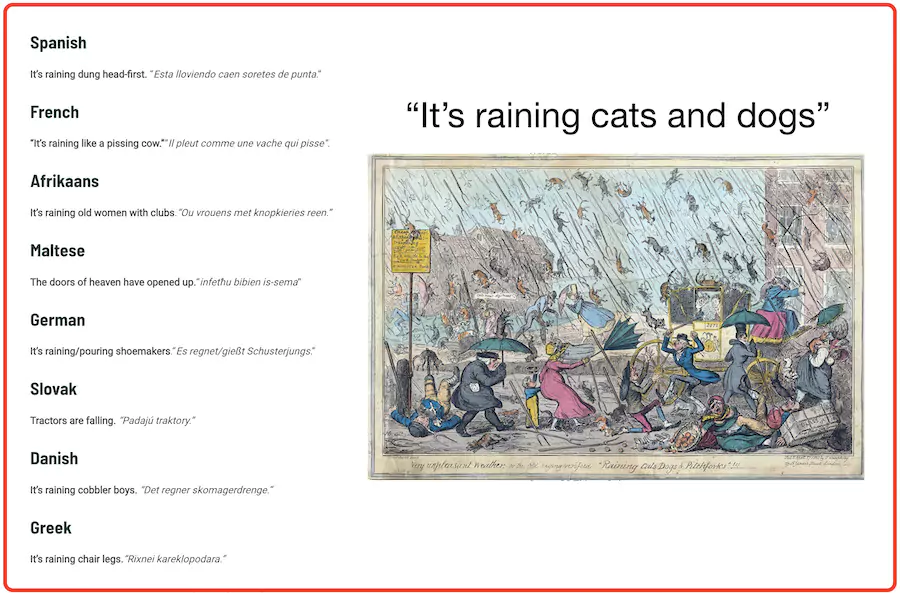
tip : Ask someone who speaks the language to proofread your translations. He will quickly spot expressions that sound wrong.
Some languages can really change the appearance of your site. Arabic, for example, is written from right to left. That changes everything!
Points to check :
Explore your site in all languages. You will avoid unpleasant surprises.
Changing the word to say the same thing can confuse your readers. If you translate “customer” sometimes as “customer”, sometimes as “customer” in English, people will ask questions.
Simple solution : Create a list of important words with their translation and context of use. Use it every time. Your text will be clearer and more professional.
Some words look like words from another language but mean something else. False friends : “condom” in French is “condom” in English, not “preservative” (which means preservative)!
Have someone who speaks the language proofread it. It will spot those pitfalls that you may be missing.
What's funny about you may be weird elsewhere because of cultural differences. A great joke in French can fall flat in English.
consultancy : Adapt your examples to each country. Sometimes it's better to create specific data and texts for certain markets than to translate everything.
By paying attention to these points, you will avoid major translation mistakes. Your foreign visitors will enjoy reading your websites without bothering themselves with weird phrases.
To translate a web page with Google Translate, follow these steps:
Yes, there are extensions to automatically translate web pages, such as extensions to translate web pages. For example, the extension Google Translate to Chrome allows you to translate web pages in one click. Install the extension, then click on the Google Translate icon in the toolbar and select “Translate this page”.
Translating your website into multiple languages and offering multilingual content can improve your SEO by increasing your Audience and by reaching new markets. Search engines value multilingual content, which can improve your rankings in local and international search results.
Translating your website is an investment that can significantly expand your reach and improve your online presence. Let's summarize the 5 main ways to translate your website:
The choice of method will depend on your specific needs, your budget, and the nature of your content. For best results, consider combining different approaches. For example, use machine translation for a quick first draft, then have a professional review for the most important content.
Remember to take into account the specifics of your target audience and your content. A well-thought-out translation strategy can not only make your site accessible to a wider audience, but it can also strengthen your brand image globally.
Ultimately, the goal is to create a smooth and natural user experience for all of your visitors, regardless of their language. With the right tools and approaches, the language barrier can become an opportunity rather than a barrier.




.avif)


%252520(1).jpeg)


.avif)