.svg)
Discover how GPT-3 AI can help business owners maximize their use of machine learning software. Explore its benefits for optimizing business processes.

GPT-3 (Generative Pre-trained Transformer 3) is a artificial intelligence platform developed by OpenAI. This revolutionary technology is based on a neural network and a colossal database, including sources like Wikipedia.
GPT-3 stands out for its advanced capabilities in natural language processing (NPL). It can understand and analyze various linguistic models, generate grammatically correct and contextually relevant text, and adapt to a variety of linguistic tasks.
This versatile platform is useful in multiple areas, such as Machine translation, the Answering questions, and the creating AI chatbots suchlike GPT chat.
Although still young, GPT-3 shows a remarkable potential. It makes it possible to constantly improve the accuracy and performance of AI models, while reducing costs and training time. Its influence in the field of natural language processing is constantly growing.

GPT-3 stands out as a reference for the development of AI, offering sophisticated linguistic models capable of adapting to various tasks. Its capabilities include:
Its rapid evolution foreshadows a significant impact on the future of automatic language processing, paving the way for ever more innovative and efficient applications in the field of artificial intelligence.
GPT-3 offers numerous potential applications for businesses thanks to its deep learning capabilities. Here's a detailed look at some of the most promising use cases:
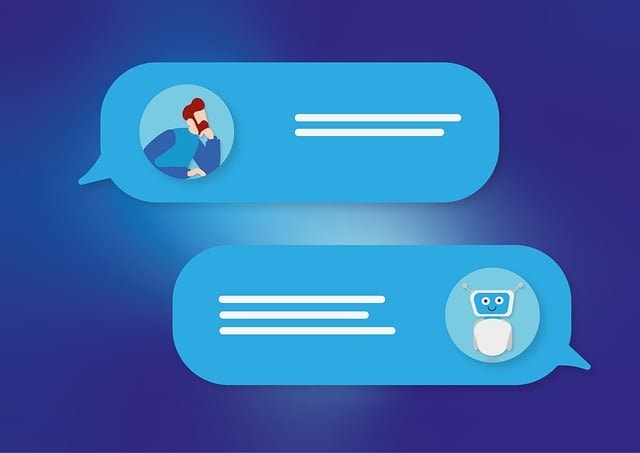
GPT-3 revolutionizes the design of Chatbots making them more natural and contextually relevant. With its vast knowledge base, GPT-3 can understand and generate nuanced responses to a variety of queries.
Chatbots powered by GPT-3 can dramatically reduce the time it takes to resolve customer issues, while maintaining a high satisfaction rate. This technology allows businesses to offer 24/7 customer service without compromising the quality of interactions.
The model can be trained to mimic the writing style of specific people, living or dead. This feature is particularly useful for producing marketing content in the style of a company founder or for creating new works of fiction in a particular style.

GPT-3 can provide financial information taking into account specific market conditions. However, it's important to note that, like any AI, GPT-3 is not infallible and its financial advice should be used carefully.
GPT-3 excels at creating creative content thanks to its deep understanding of narrative structures and linguistic nuances. It can generate content in numerous languages with remarkable fluidity.
The quality of the creative content generated by GPT-3 is often deemed original and engaging by readers, opening up new perspectives for creative industries.

In the field of programming, GPT-3 acts like a Smart co-pilot, able to understand the developer's intent and generate corresponding code. It supports a lot of popular programming languages.
Developers using GPT-3 as an assistant report a significant increase in productivity. This technology not only makes it possible to speed up the coding process, but also to explore new creative solutions to complex programming problems.
GPT-3 transforms the social media management by automating the creation of engaging content. It can analyze current trends and adapt the tone and style of the content accordingly.
This ability to produce relevant and up-to-date content allows businesses to maintain an active and engaging social media presence, even with limited resources. GPT-3 can help create a variety of content, from daily posts to more elaborate thematic campaigns.

GPT-3 revolutionizes blog content creation by generating comprehensive, well-structured, and informative articles. It can produce content on a wide range of topics with remarkable depth and precision.
This technology allows businesses to maintain a constant flow of quality content that is essential for SEO and reader engagement. GPT-3 can help develop in-depth articles, practical guides, or even trend analyses in various sectors.
In conclusion, GPT-3 represents a major advance in the field of generative AI. Its versatility and power make it a valuable tool for a multitude of applications, from content creation to technical assistance. While not a substitute for human expertise, GPT-3 significantly increases capabilities in many areas, paving the way for new forms of innovation and productivity.

The Content spam represents a significant risk with the use of GPT-3. This AI model can generate text that is virtually indistinguishable from that written by a human, which could be exploited to massively create misleading content.
Potential consequences include:
Although search engine algorithms are constantly improving, the sophistication of GPT-3 poses new challenges in detecting artificially generated content.
Social engineering takes on a new dimension with GPT-3. Its ability to produce contextually relevant and personalized text could be misused for malicious purposes.
GPT-3 could be used to:
La advanced customization made possible by GPT-3 greatly increases the potential effectiveness of these attacks, making them more difficult to detect and counter.

The automation facilitated by GPT-3 raises important questions about the future of work. Many jobs, especially those involving repetitive tasks of Word processor, could be at risk.
Domains potentially affected:
While automation can bring efficiency gains, it also raises concerns about workforce adaptation and economic fairness.
GPT-3 excels at mimicking writing styles, raising serious concerns about digital impersonation and the spread of misinformation.
Potential risks:
This ability to imitate could further erode trust in online information and make it difficult to verify the authenticity of content.

GPT-3, despite its sophistication, has a fundamental limitation: its inability to learn continuously. Unlike human intelligence, which is constantly adapting, GPT-3 remains frozen in time, its knowledge being limited to the date of its last update.
This constraint is manifested in several ways:
Although OpenAI releases updates regularly, the gap between GPT-3 knowledge and current events remains a major challenge for its use in certain areas that require up-to-date information.
The “black box” nature of GPT-3 poses significant problems in terms of transparency and explainability. The model produces results without providing a clear explanation of its reasoning process.
This lack of transparency raises several questions:
This opacity limits the application of GPT-3 in areas where the traceability of decisions is crucial, such as medicine or law.

Despite its power, GPT-3 can sometimes be slow in generating responses, especially for complex tasks or long texts. This latency can be a problem in contexts that require real-time interactions.
The implications of this limitation include:
This performance constraint highlights the importance of properly evaluating the suitability of GPT-3 to the specific needs of each project.
Les inherent biases to GPT-3 represent one of its most complex and worrying challenges. These biases, inherited from training data, can lead to discriminatory or inaccurate results.
Possible manifestations of these biases:
Managing these biases requires constant vigilance and continuous efforts to diversify and balance training data, as well as to develop methods for detecting and correcting biases in model outputs.

The OpenAI startup was updated thanks to donations from the founders, including Elon Musk and Sam Altman (preceded by GPT and GPT-2).

With the mission of creating safe artificial general artificial intelligence (AGI), OpenAI started in 2015 and required several years of training to release the first version of GPT, then the second version, called GPT-2 (then GPT-4 in 2023).
It is said that GPT-3 has 175 billion parameters, which contains more than 1.5 billion data parameters than any other network available.

With the largest linguistic model available and up to ten times the size of Microsoft's NLG Turing model (the second largest model), this platform is the most powerful AI system there is.
OpenAI is based in San Francisco and run by Sam Altman with over 120 employees (as of 2020), the company is continuously working to develop this technology even further using ever more models and parameters.

Developers using this technology can use Python (as well as other programming languages) to interface with the API provided by OpenAI GPT-3.
It will be interesting to see how this technology evolves in the future with OpenAI GPT-4.

As various projects to continue improving this technology are under way, GPT-3 is likely to be more widely adopted.
With this in mind, one of the most exciting projects that has shown great potential is DALL-E 3 by OpenAI.
DALL-E 3 is a cutting-edge AI system that can produce realistic images and art based on natural language model description.
By giving a brief prompt of what you want the system to generate, for example “a zebra on a purple background,” DALL-E 3 will create an image that looks real.
The good news is that it will only take a few seconds to generate.

Although this technology is still in its infancy, it is very promising for the future of GPT-3.
In this article, we saw that the launch and the enthusiasm around GPT-3 is understandable.
The neural network used by this startup is the most powerful ever created, and it has the potential to revolutionize the way we interact with prompt computers (instructions in text form)
However, it's important to remember that the GPT model is still in its early stages.
It's not perfect and it will take time for it to reach its full potential.
In the meantime, we can use GPT-3 to experiment with new ideas and applications.
And who knows?
Maybe one day, GPT-3 will become the cornerstone of a new era of computing to develop code, a blog post summary, text translation, a marketing email or a transactional email, answers to any question, etc.
Artificial intelligence is used in many facets of business and can help you optimize and accelerate processes.
Whether it's about AI chatbots that can simulate human conversation with customers or AI development software that can speed up the process of bringing new applications to market, Artificial intelligence is impacting society and businesses in a variety of ways.
Finally, if your company or business depends on search engine traffic for inbound marketing, check out this post on the best SEO AI tools.
These tools allow you to stay ahead of the curve and ensure that your website is properly optimized for search engine algorithms.
READ MORE: Auto-GPT: What is it?