.svg)
Discover the best software for virtual events thanks to our detailed test and opinion to choose the best virtual platforms

A virtual event platform is a digital tool that allows businesses and individuals to organize and manage online events.
These platforms offer a virtual space where the participantss - whether it's employees, exhibitors, sponsors or the general public - can interact with each other dynamically.
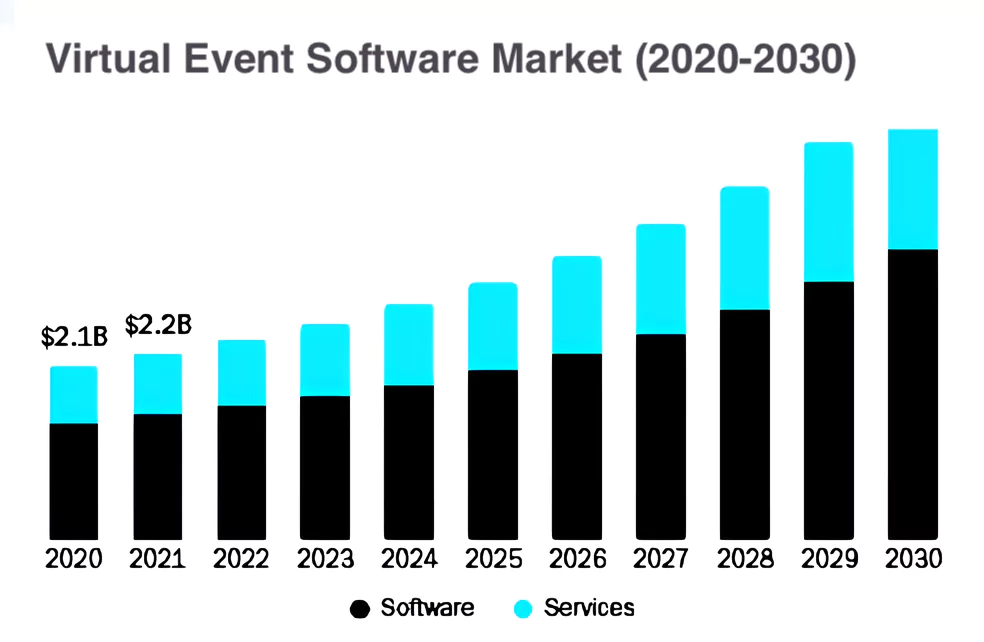
The virtual event software market is growing exponentially.
Valued at around $9.6 billion in 2021, it expected to reach $24 billion by 2028, with a average annual growth rate of 12.4%.
When choosing a virtual event platform, it is essential to carefully consider the built-in web delivery features.
Key features to look for include:
By selecting a platform with the right features, you can create interactive and engaging virtual events that effectively meet your organization's goals.
List of popular and impressive online event platforms:
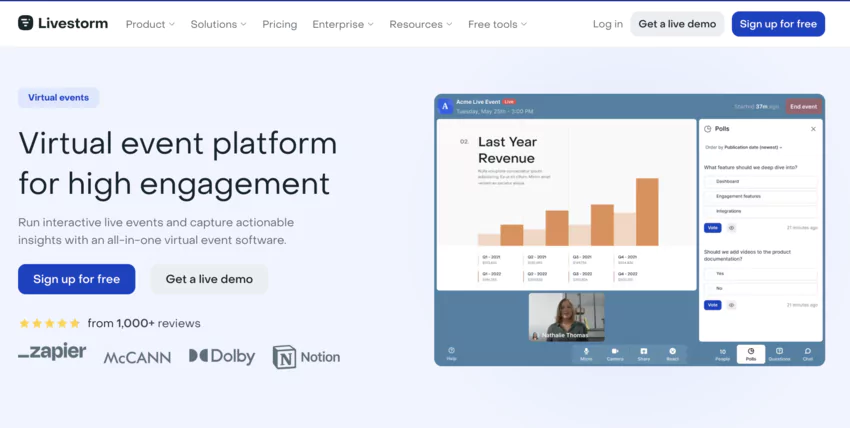
Created in 2016, the platform LiveStorm focuses on the needs of marketing teams.
Son clean interface And its connections with CRM tools suchlike HubSpot and Salesforce make it popular with over 4000 businesses in 165 countries, including Workday and Pipedrive.
Used to organize webinars and video meetings, Livestorm is appreciated for its simplicity and collaborative functions. However, some users would like more options for customizing their events.
Users particularly praise its engagement and analytics capabilities, although some find the customization options limited.
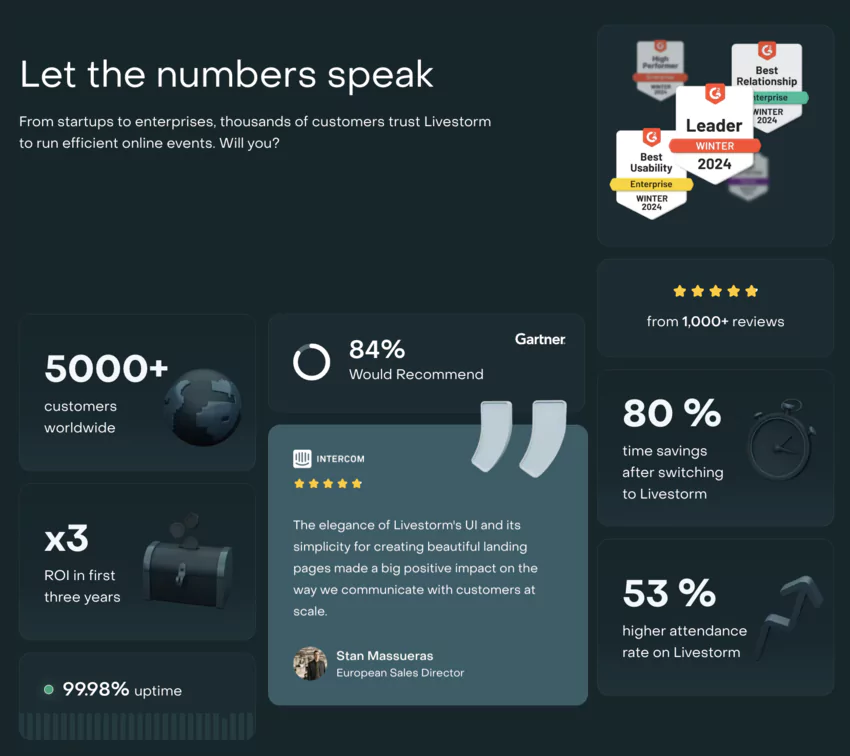
Livestorm offers a range of pricing plans that are suitable for various event sizes, but users note that costs increase rapidly with the number of participants. The free plan is limited, pushing professionals to more expensive options.
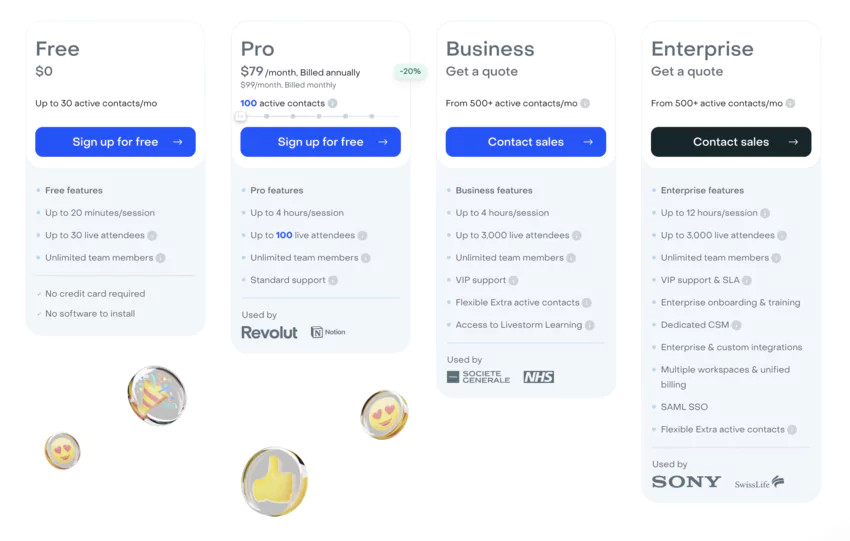
User reviews : Livestorm shines by its ease of use. Its intuitive interface appeals to many users, but some lament the lack of customization options for more complex events.
FIND OUT MORE: Go to the Livestorm website
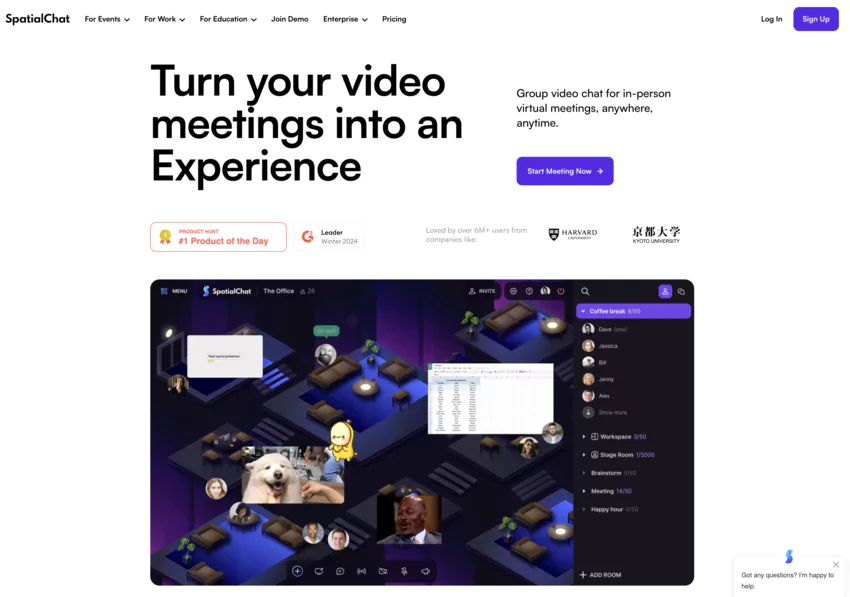
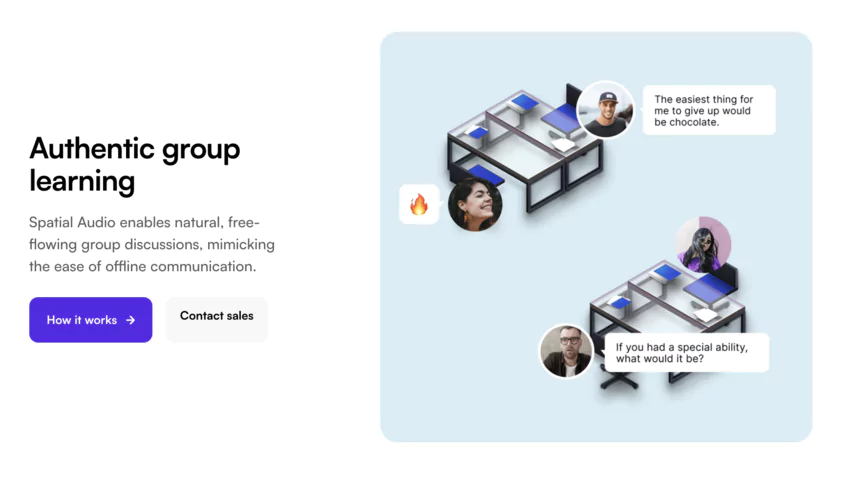
Launched in 2020, SpatialChat offers an innovative approach to online dating with its interactive spaces in 2D. Popular in creative communities, startups and universities, this platform allows more natural exchanges between participants.
Its unique concept seduces, but may require time for new users to adapt, especially those unfamiliar with this type of environment.
SpatialChat distinguished by its innovative approach virtual interactions, offering a more natural and immersive experience. Users appreciate the flexibility of virtual spaces, but some find the learning curve A bit steep for less tech-savvy participants.

SpatialChat offers an immersive experience for online events, with a flexible pricing model. However, prices can get high for big events or intensive use.
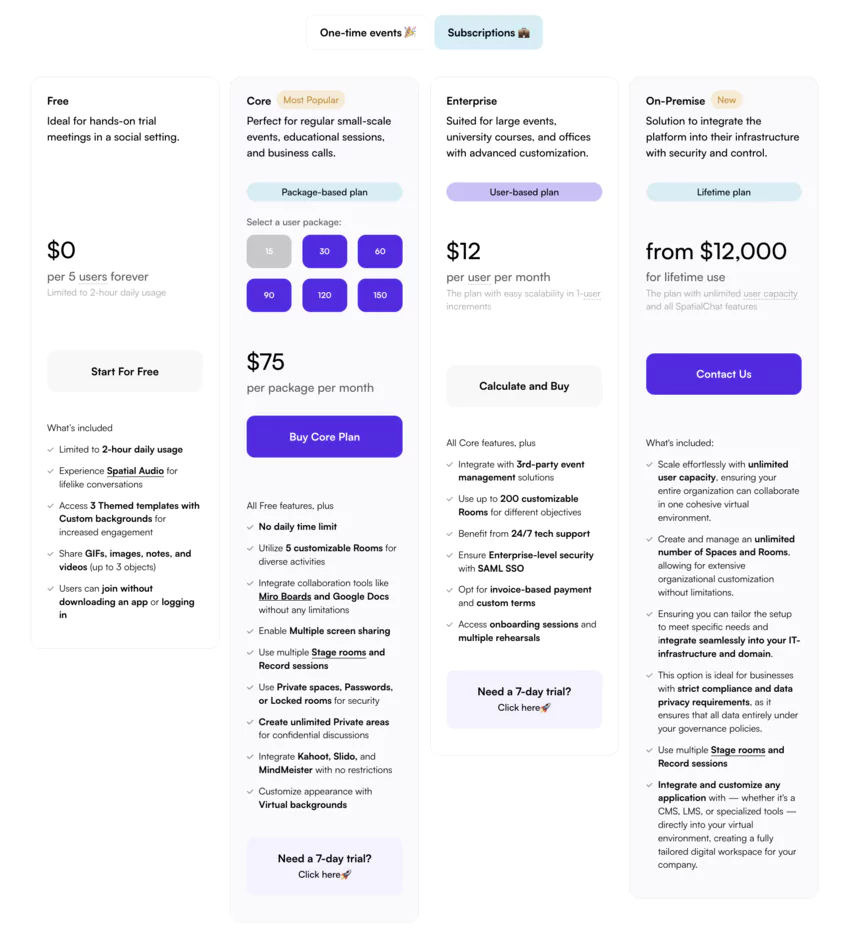
User reviews : The immersive SpatialChat experience is a major asset for online collaboration. However, Watch out for possible slowdowns during large virtual gatherings.
FIND OUT MORE: Go to the SpatialChat website
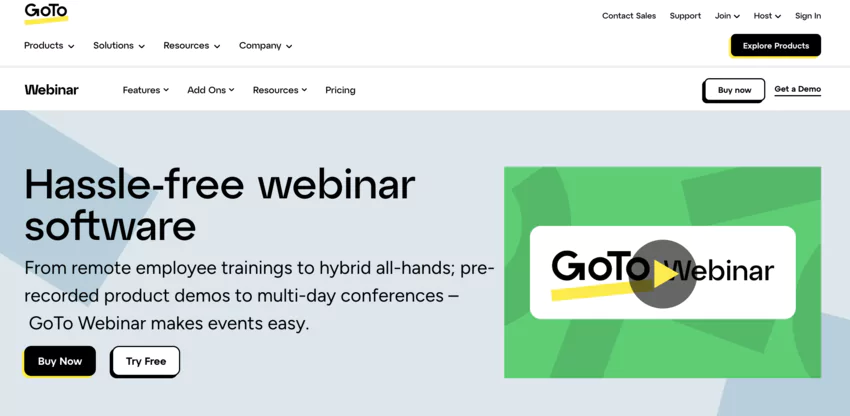
A leading player since 2004, GoTo Webinar is the trusted solution for over 50,000 businesses, including Comcast.
Recognized for its reliability during major events, however, it may seem less modern compared to the new virtual event platforms on the market.
GoTo Webinar is appreciated for its stability and webinar-oriented features. Users praise its reliability for big events, but some find the interface a bit dated compared to more modern solutions.

GoTo Webinar is known for its features, but its high cost can be a drag on small businesses, especially as the number of attendees increases.
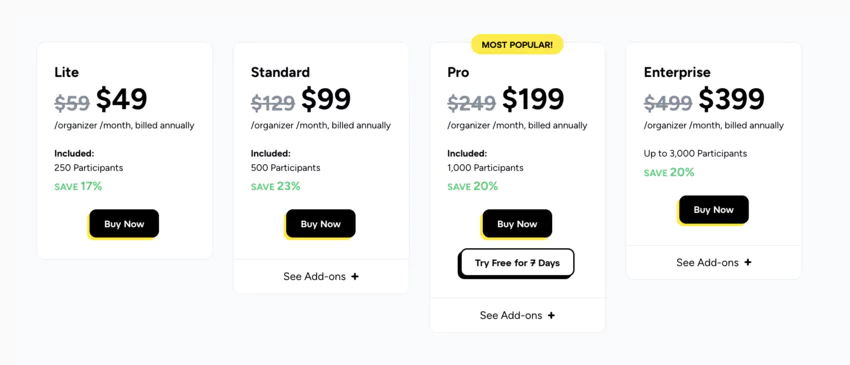
User reviews : GoTo Webinar offers a solid platform for professionals. Its strengths:
FIND OUT MORE: Visit the GoTo Webinar website
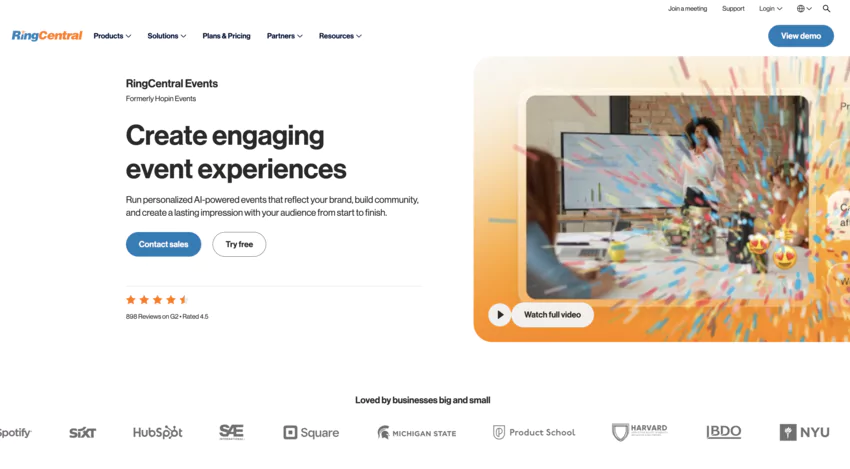
RingCentral Events, formerly known as Hopin, is a platform that makes it possible to manage large-scale virtual and hybrid events. Its interface and interactive options make it possible to create digital experiences that are suitable for events of all sizes.
RingCentral Events maintains the core options that Hopin is known for, while adapting to the current needs of hybrid events. Here is an overview of the main features:

RingCentral Events offers several pricing plans to meet the different needs of event organizers:
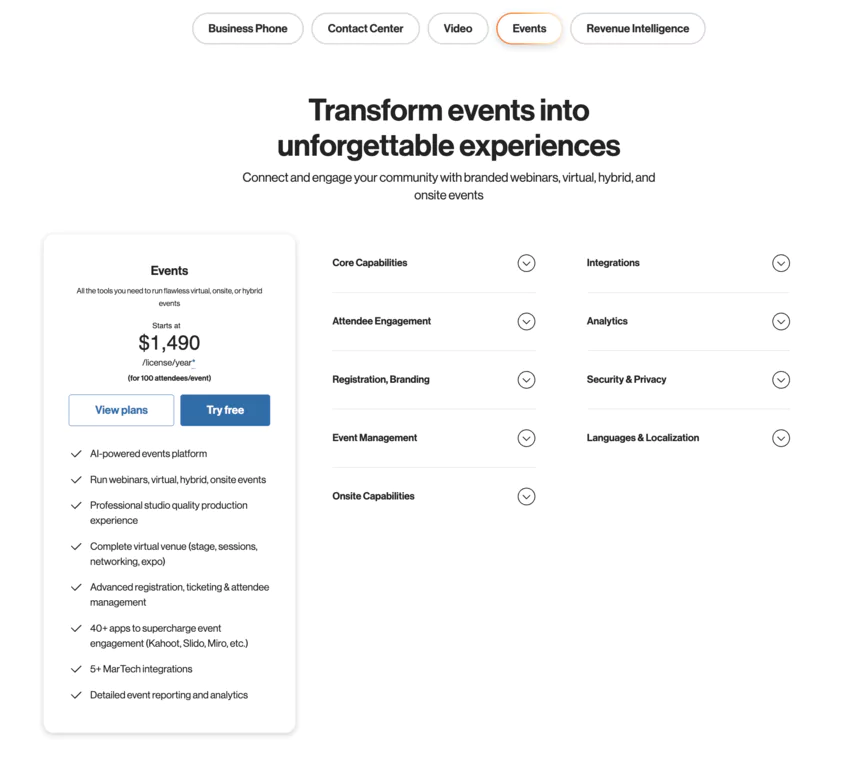
User reviews : Users appreciate the wealth of options in RingCentral Events, which are particularly suited to complex, large-scale events. However, prices can be considered high for small and medium-sized businesses, especially for large events. The free version is considered too restricted for professional use, while large organizations value the reliability and adaptability of the platform.
FIND OUT MORE: Go to the RingCentral Events website
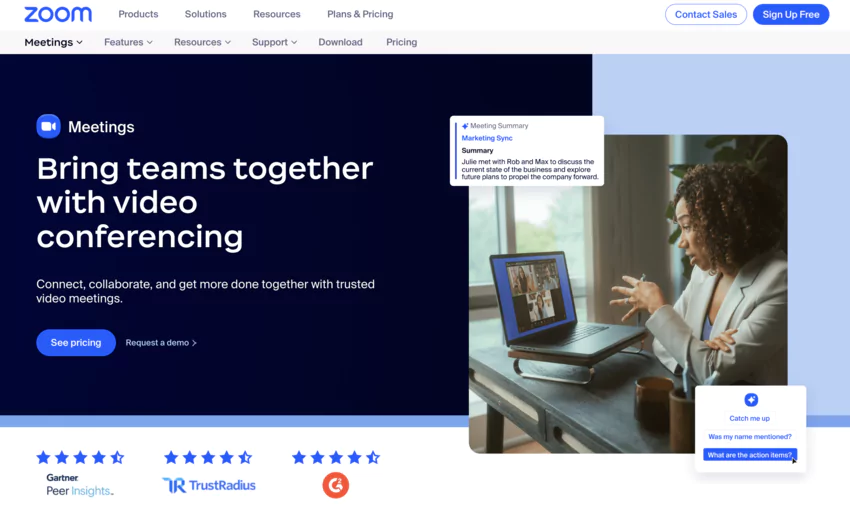
Having become a must since its creation in 2011, Zoom gathers daily 300 million participants. Its ease of use makes it a popular choice for small and large businesses for meetings and events.
Despite initial concerns about security and privacy, these issues have largely been resolved through updates.
Zoom is widely recognized for its reliability and ease of use. Users appreciate its features for large events, although some find that the platform lacks advanced options for engaging attendees compared to specialized virtual event solutions.
Zoom offers a variety of pricing options, from free to paid, but the criticisms focus on time limitations in the free plan and increased costs for advanced features.
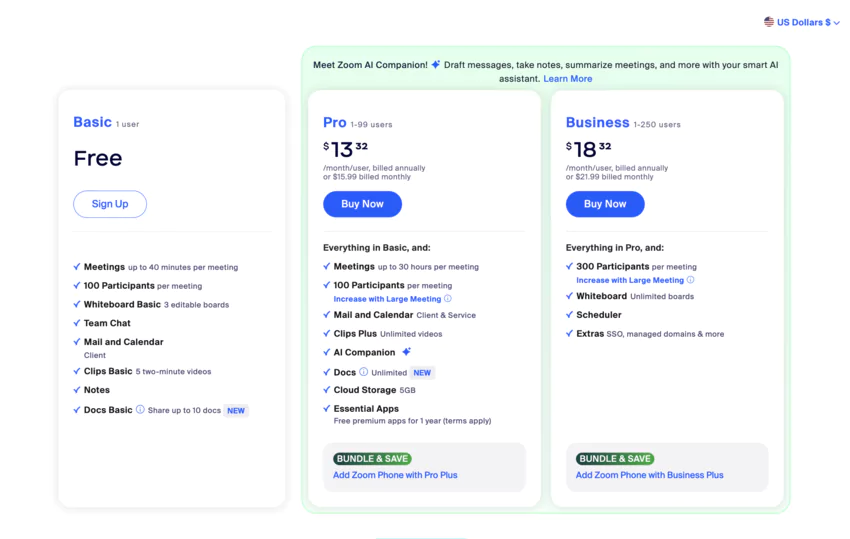
User reviews : Reliability and ease of use are the key words. Novices and experts alike appreciate its user-friendly interface, even if issues of security and bandwidth consumption persist.
FIND OUT MORE: Go to the Zoom Meetings website
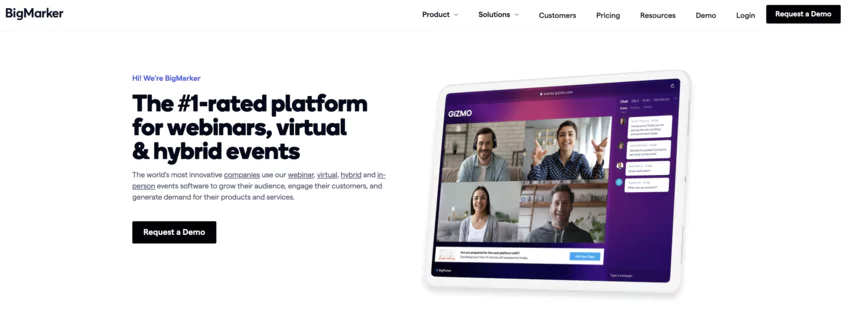
Founded in 2010, BigMarker stands out for its exceptional flexibility in terms of personalization. Businesses like Google are using it to organize immersive virtual conferences.
The platform offers numerous options for adapting webinars on a large scale. However, less experienced users may find the interface complex to master, especially for simpler events.
BigMarker is recognized for its versatility and advanced webinar and virtual conference features. Users particularly like its personalization and engagement options, although some find the platform a bit complex for simpler events.
BigMarker is loved for its numerous customization options, but costs can increase rapidly with the addition of advanced features and participants. It is often considered to be more suitable for larger businesses.
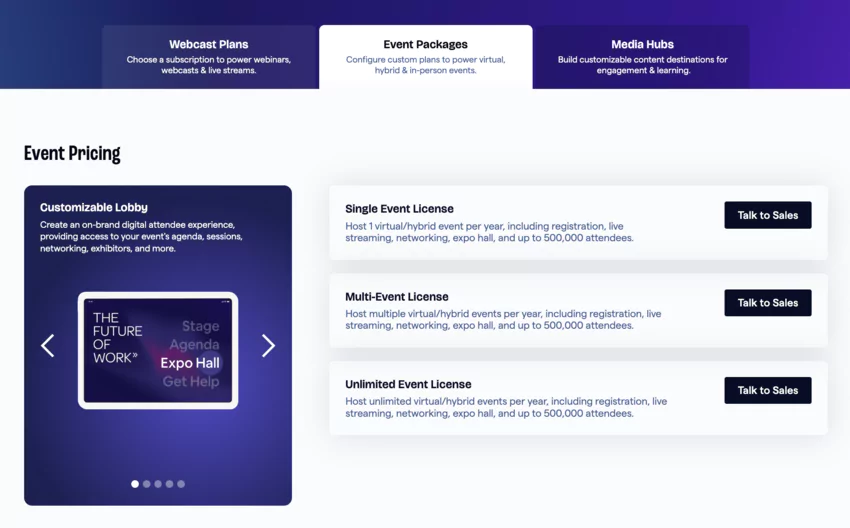
User reviews : BigMarker stands out for its advanced marketing integrations. Its interface is full of options, which can be an advantage or a disadvantage depending on your level of expertise.
FIND OUT MORE: Go to the BigMarker website
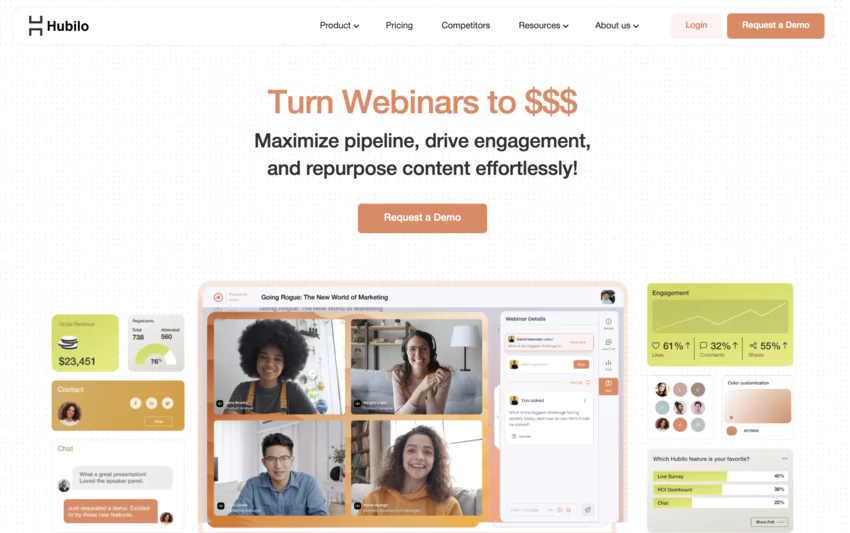
Created in 2015 and reoriented to the virtual in 2020, Hubilo is used by companies like Walmart.
It is distinguished by its audience engagement features such as quizzes and polls. The platform excels in organizing large-scale interactive events. However, its high cost can be a hindrance for small businesses or events on a limited budget.
Hubilo is appreciated for its simplicity and its engagement features. Users particularly praise its networking and gamification options., although some find that the interface can be a bit overloaded for smaller events.
Hubilo is known for its intuitive interface and customization options for virtual events. However, its high costs can be a problem for businesses on a limited budget, and the lack of clear public pricing is often criticized.
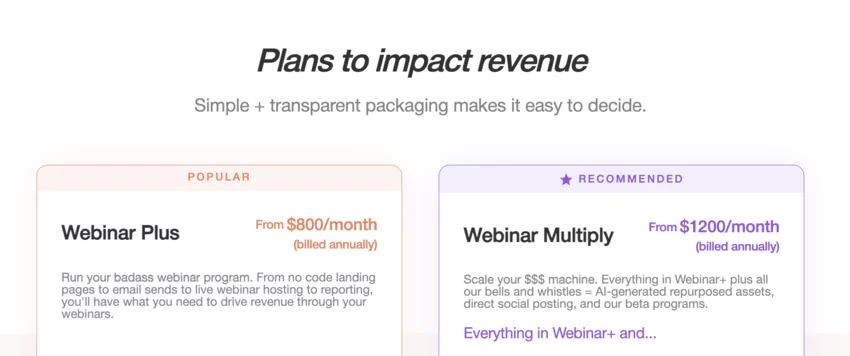
User reviews : Hubilo's networking features are particularly appreciated. However, beware of possible slowness during events involving a large number of participants.
FIND OUT MORE: Go to the Hubilo website
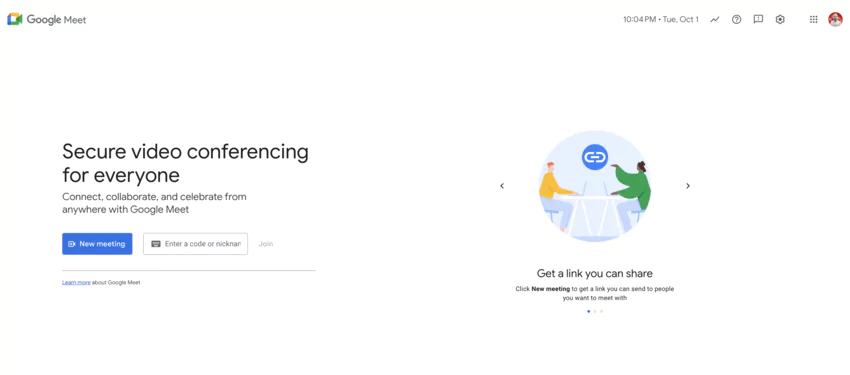
Launched in 2017, Google Meet is integrated into Google Workspace. It offers a simple and free solution for online meetings and small events.
Easy to use, Google Meet lacks some of the advanced features that are present. with competitors like Zoom or Livestorm, which can the limit for more complex events or of a large scale.
Google Meet is appreciated for its ease of use and its seamless integration with the Google ecosystem. Users praise its reliability and ease of access, but some find event-specific features to be limited compared to specialized platforms.
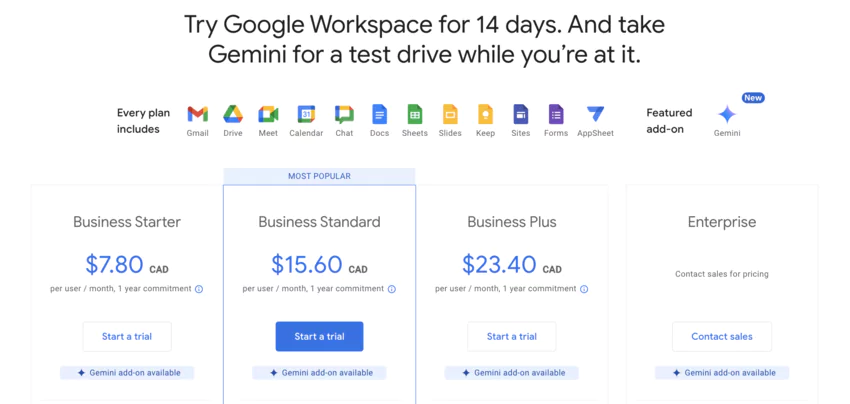
Google Meet is loved for its ease of access and integration with Google Workspace. However, users note that advanced features and larger events require paid subscriptions.
User reviews : Google Meet is synonymous with its simplicity and perfect integration into the Google ecosystem. Great for basic meetings, but may be limited for more sophisticated virtual events.
FIND OUT MORE: Go to the Google Meet site
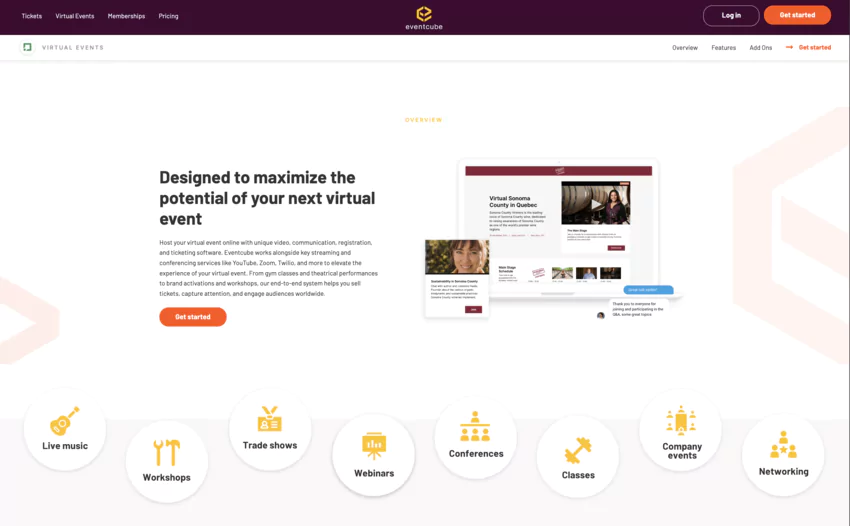
Founded in 2014, Eventcube specializes in ticketing management and virtual or hybrid events. Used by institutions such as the NHS and the University of Cambridge, it offers great flexibility for customizing event ticketing.
While she excels in this area, some users note that she can lack some live streaming features offered by other platforms.
Eventcube is appreciated for its flexibility and advanced ticketing features. Users particularly praise its customization options and intuitive interface, although some find the live-streaming features to be less developed than on other platforms.
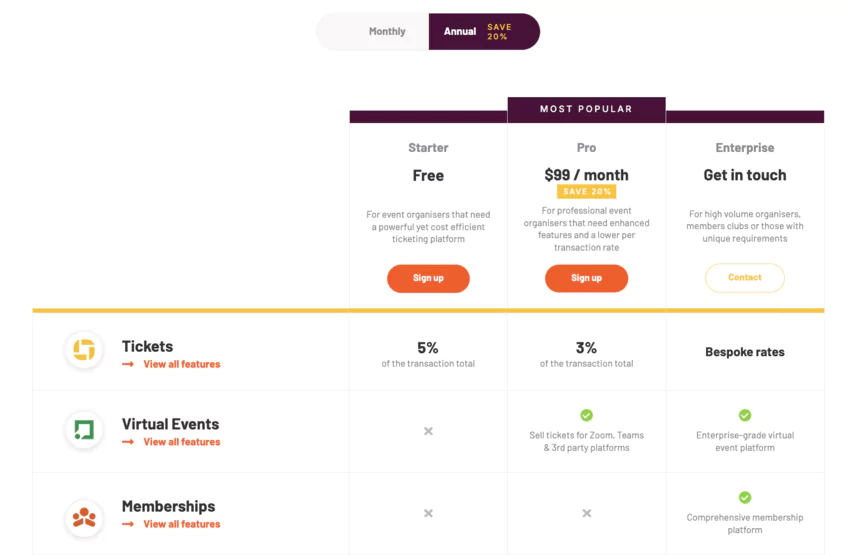
Eventcube is well received for its quality-price ratio, especially compared to Eventbrite. However, reservation fees may seem high for some participants. Flexible pricing and advanced features are appreciated by organizers of recurring or large-scale events.
User reviews : Eventcube excels in customizing ticketing. Its interface offers a lot of possibilities, but may seem complex at first glance.
FIND OUT MORE: Go to the Eventcube website
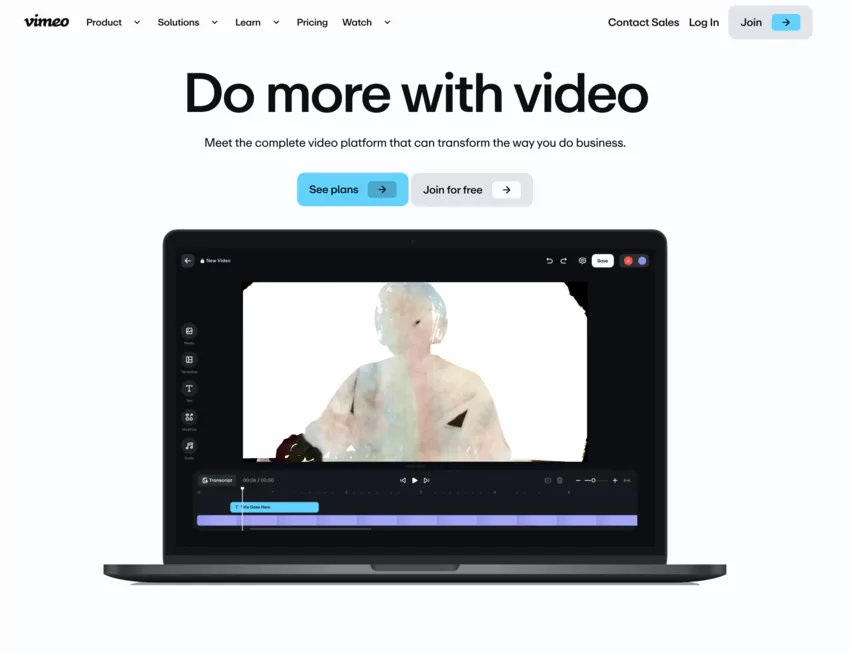
Founded in 2004, Vimeo is recognized for its superior video quality for video streaming. Companies like Starbucks and Deloitte use it for their video delivery needs.
Vimeo excels at delivering quality video content, but it may lack some of the live interactive features that platforms like Zoom or Hopin offer. Its interface, although powerful, may require some learning time for new users.
Vimeo is known for its superior video quality and professional streaming features. Users especially like its built-in video editing tools and customization options, although some find the price high for small businesses.
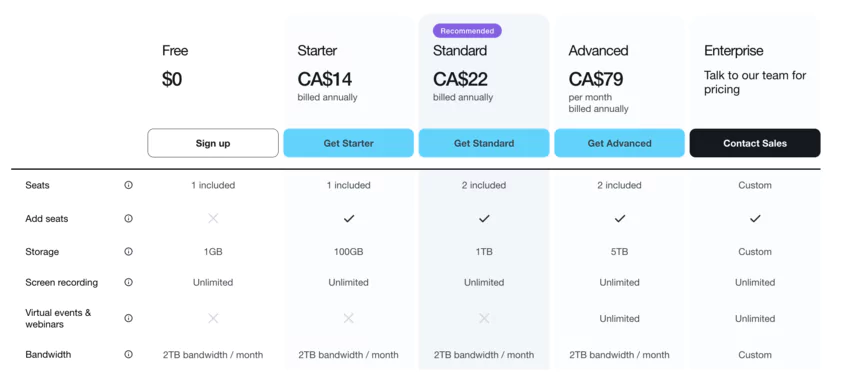
Vimeo is popular for its video quality and professional features, but the rates are considered high for large events. The lack of some live interaction features in the basic plans is criticized.
User reviews : The exceptional video quality of Vimeo is unanimous. The interface, while powerful, may require time to learn to exploit its full potential.
FIND OUT MORE: Go to the Vimeo website

Created in 2018, HeySummit is a practical solution for organize virtual summits. It is used by companies like Shopify and ConvertKit. HeySummit is distinguished by its simplicity in organizing multi-session events.
However, it depends a lot on others video streaming services, which can make integration difficult for some users. Despite this, it remains a popular choice for those looking to set up virtual summits easily.
HeySummit is appreciated for its ease of use in organizing virtual summits. Users praise its flexibility and built-in marketing features, although some find that the customization options could be more extensive.
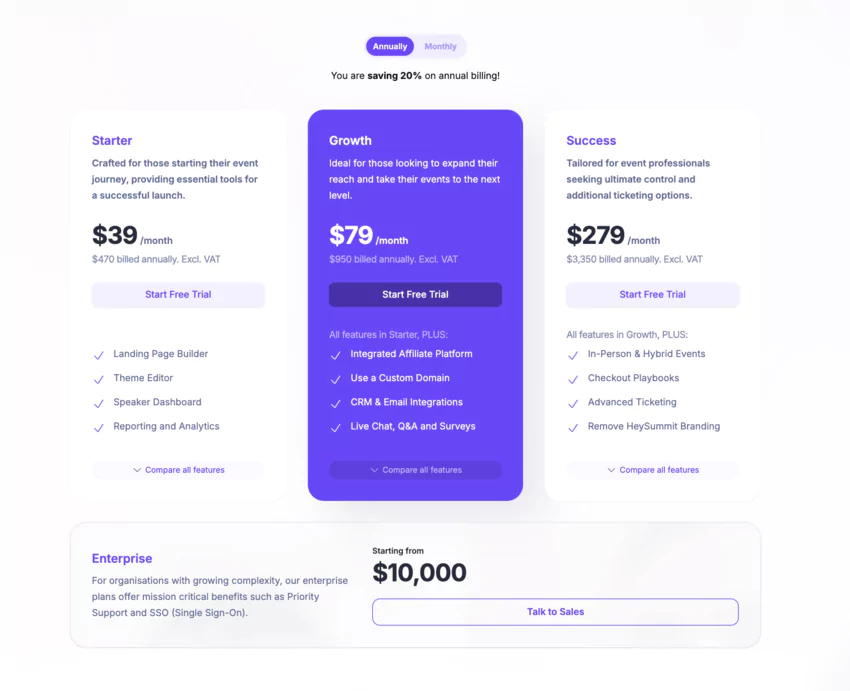
HeySummit is effective for organizing virtual summits, but its rates are considered expensive for small businesses or independent creators. The wealth of features, however, justifies the prices for many.
User reviews : HeySummit is the ideal tool for multi-session virtual summits. Its weak point? The sometimes delicate integration with other streaming tools.
FIND OUT MORE: Go to the HeySummit website

The”Live and On-Demand“is an essential part of modern virtual event platforms. It allows you to broadcast content in high definition, up to 4K for superior image quality.
High-performance platforms stand out for:
Multi-stream broadcasting is very useful for complex events, to provide a richer experience for participants.

The adaptability of the interface is essential to create an experience that is consistent with the identity of the event. The best platforms allow the organizer's logo, colors, and custom fonts to be integrated. They also offer the creation of custom home and registration pages.
The addition of interactive widgets and the personalization of event-related emails reinforce the immersion of participants in the unique virtual environment of each event.
Interaction is at the heart of successful virtual events. Participation tools generally include real-time chats and Q&A.
Gamification elements can significantly increase participation:
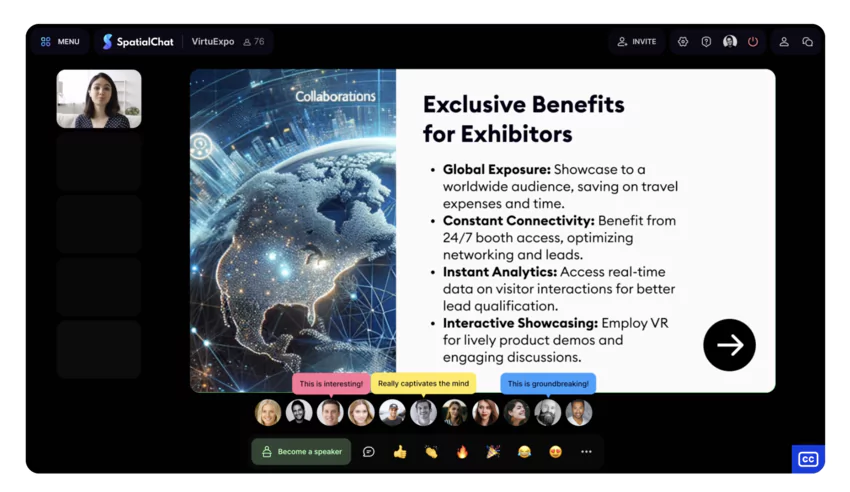
Session management is essential for a well-run event. Key features include support for multiple time zones and a virtual waiting room to prepare for sessions.
Multi-language support with simultaneous translation is a major advantage for international events, to significantly expand the target audience.
The ability to integrate with other tools is essential to manage the event. Modern platforms stand out for their flexibility and openness.
Key integration features:
The open API allows developers to create custom extensions, to adapt the platform to the specific needs of each event.

Detailed analyses and reports are essential for assess the impact of a virtual event. Advanced platforms offer customizable dashboards with real-time metrics.
The analysis of the user journey makes it possible to understand the behavior of participants, while engagement heatmaps show key moments from the event.
Export capabilities:
Data protection is the number 1 priority for virtual events. Serious platforms put solid security measures in place.
AES 256-bit encryption is the standard for secure exchanges, compliance with regulations such as GDPR and CCPA protect participants' personal information.
A role-based access control system allows for fine management of permissions and reinforces the overall security of the event.
Sponsor and exhibitor features are essential for the commercial success of virtual events. Modern platforms offer tools to maximize visibility and return on investment.
Customized virtual stands : These digital spaces allow sponsors to present their products and services interactively. They may include videos, downloadable brochures, and live chat options.
Private demo rooms : These spaces allow exhibitors to offer private presentations or one-on-one meetings with interested prospects.
Leads are qualified thanks to analysis tools that measure the engagement of visitors with the content of the stands.
Networking remains a main reason for registering for an event. High-performance platforms offer innovative solutions to facilitate connections between participants.
Popular networking tools:
Intelligent matchmaking uses participants' profiles and interests to Suggest relevant connections, reinforces the value of the networking experience

Technical support is essential for a virtual event. The best platforms offer comprehensive support to organizers and participants.
THE24/7 technical support will respond quickly to any issues that may arise during the event. Regular training, in the form of webinars or tutorials, helps organizers master all the functionalities of the platform.
For major events, dedicated account managers can be awarded, for personalized support throughout the organization process.
The organization of a virtual event depends on the number of participants in the event and the cost per user of the scheduling software of events. For example, the cost of organizing an event in Eventcube with a maximum of 5 participants is $14.98. Organizing an event with up to 100 participants costs approximately $297.
The top virtual event platforms that have received positive reviews are Hoppier, SpatialChat, Hopin, Big Marker, and Zoom. You should read our review to find out the features and prices of virtual event software.
Answer: You can monetize virtual events by selling ads online. You can contact reputable brands to promote their products to participants. In addition, you can promote and sell merchandise online to participants.
HeySummit and Hubilio are great virtual event platforms for organizing events with monetization features. The best platform with question and answer functions, Live chat And of surveys is Vimeo and GoTo Webinar.
If you want a free virtual event platform, you should consider Hopin, LiveStorm, Zoom, Google Meet, and Miro. Marketers can choose BigMarker, which supports automated, live, and continuous webinars.