.svg)
In a post-COVID world, you've certainly heard of Zoom — it's the company that's become synonymous with webinars and video conferencing software.
Zoom also offers Zoom Phone, Zoom Webinar, Zoom United, and Zoom Rooms.
Video conferencing tools like:
... allow you to organize video calls, conference calls, online meetings, and large and powerful webinars.
This Zoom review covers Zoom's capabilities as a video conferencing software and webinar, as well as Zoom's price, pros and cons, and Zoom alternatives.
READ MORE: Comparing Zoom vs. WebinarJam vs. GoToMeeting vs. Webex
Zoom seems to have its hands in a lot of pots. It seems like their business model is about creating tons of product offerings, and they're doing it well, but it's also a lot more expensive than most small business owners can handle.
Zoom is a great webinar software for large businesses with a ton of resources. Overall, I don't think Zoom is for smaller teams, even with its free and pro account options. The prices add up too quickly and it's hard for me to approve this software for small businesses.
READ MORE: How do I use Zoom? Beginner's guide
Zoom is a modern communication solution that allows users to connect via chat, phone, audio, and video. Recently, its Zoom Meetings video conferencing service evolved into a unified platform called Zoom One. This unified communications approach combines persistent chat, meeting, and whiteboard capabilities to provide teams with multiple ways to connect and collaborate.
Click on the tabs below to see a breakdown of some of the main features Zoom offers:
Zoom offers a modern video conferencing solution that makes it easy to organize meetings and collaborate with teams on any device. Its desktop app and mobile app have essential features to make virtual meetings more engaging and interactive.
Here are the features offered by Zoom Meetings:

Zoom successfully resolved security issues in early 2020. It has made additional security efforts, including end-to-end encryption, role-based security, passcode protection, and waiting rooms. Despite these improvements, many users remain reluctant to use the platform.
Zoom has redesigned the virtual whiteboard experience by introducing a new visual collaboration solution to help teams visually structure their ideas on a digital canvas.
The Zoom whiteboard has improved features, such as sticky notes, image drag and drop, and advanced shapes and connectors. It also includes intuitive sharing controls and integrates with existing workflows to easily share ideas and allow teams to collaborate anywhere.

Online whiteboards are saved automatically after a virtual meeting. Use the sharing sheet to share your whiteboard with anyone who has a Zoom account. Access it on a Zoom desktop client, web browser, or Zoom Room for Touch device.
Zoom offers various options for creating subtitles in virtual meetings and webinars. These options are designed to meet accessibility requirements and help meeting participants easily follow conversations. They include manual captioning (having someone type in the captions), an integrated third-party subtitling service, or Zoom's live transcription feature.
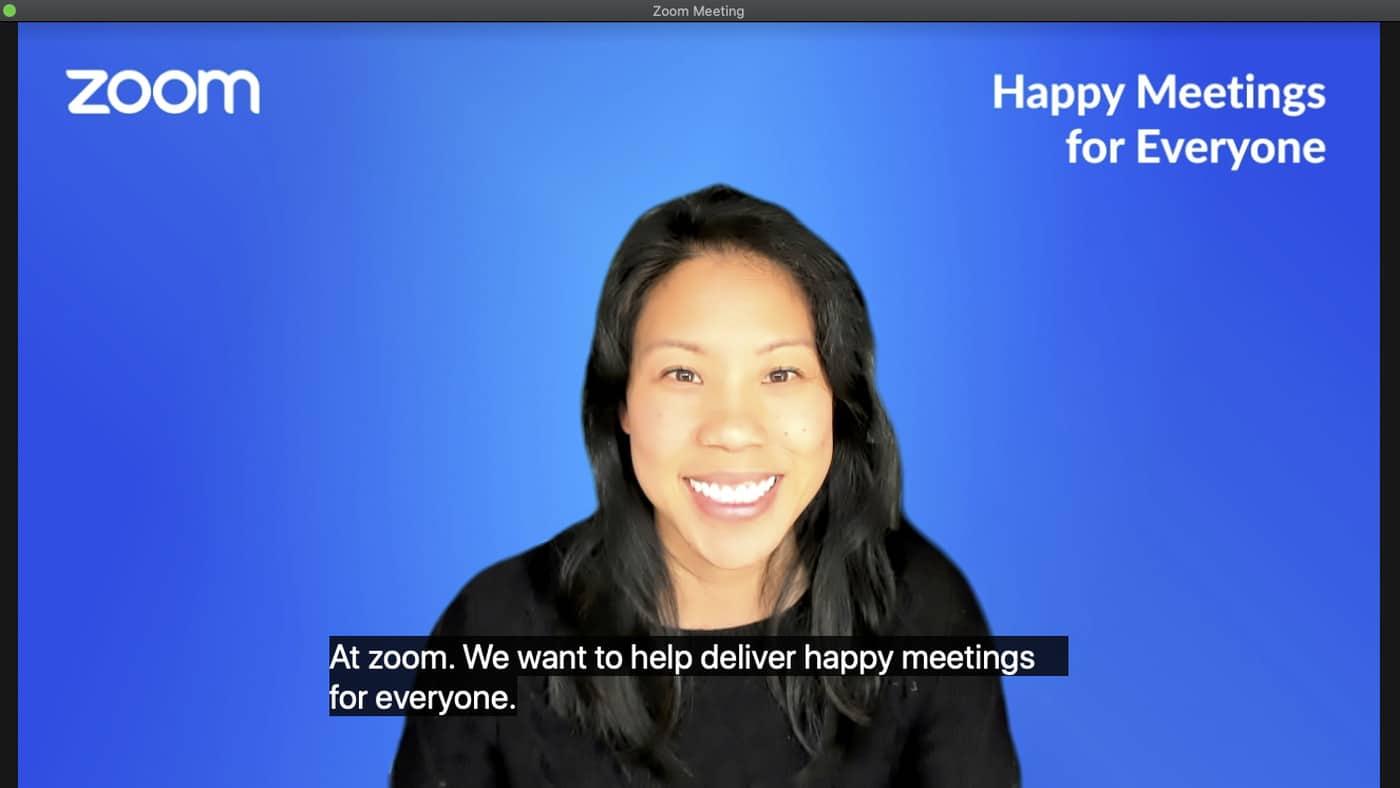
Translated subtitles automatically translate the meeting conversation into another language. Supported languages are French, German, Spanish, Italian, and Chinese. Although the host determines which subtitle language to use during the live session, participants have the option of activating the subtitles and choosing their preferred language.
Zoom allows you to share a variety of content from your screen in a virtual meeting or webinar, even if your video stream is activated. This feature gives users total control of their own screen and the ability to choose what participants can and cannot see. All participants in a Zoom meeting can share their screen, but the host controls the participant's ability to use screen sharing.
Here are the types of content that users can share during a Zoom meeting:

Zoom's instant messaging features help streamline communications between team members and external Zoom users.
Start a one-on-one discussion or create a public or private channel organized by topics, projects, or teams.
In an individual message thread or chat channel, users can send emojis, start a virtual meeting, share files, or mention users to get their attention.

When a meeting is over, Zoom allows users to share a meeting recording or whiteboard session on any channel with just a few clicks. Zoom Chat also has calendar integrations to sync status and presence, so other team members can see if someone is busy, available to chat, or in a meeting. Personalized notifications and starred chats keep important messages organized and accessible.
The Zoom Desktop client allows users to schedule and start meetings directly from the Zoom app. It comes in the form of a single window with a modern and clean appearance. Under the Home tab are four familiar icons that allow you to start, schedule, join a meeting, or share your screen. It shows all the details of your upcoming meetings so you don't miss your video appointments.
Zoom has introduced a new feature called “upward search” that makes it easy to find contacts, files, messages, or chat channels. By clicking on your image, you can manage your settings, define your presence using a status message, and switch between portrait and landscape desktop views. While the web portal is primarily used to change meeting settings, Zoom allows you to use in-app features such as virtual background and audio/video settings.
Zoom has an extensive list of expansion plans for those who want to complement another feature with their existing subscription. Add-ons include higher participant caps, larger cloud storage, and audio conferencing features. To take advantage of these additional options, you must have at least one licensed user.
Here are some of the basic features that are included in Zoom Meetings:
The Zoom webinar and events feature is an add-on that you can purchase to accompany the Zoom video conferencing feature. But Zoom Webinar is not a separate being. This means that in order to use the Zoom webinar tool, you also need to buy a Zoom Pro account or higher.
READ MORE: How do I schedule a Zoom meeting?
Zoom offers several pricing plans to meet different business conferencing needs. Let's break down each level and discuss what each level offers.
Zoom is a fairly affordable teleconferencing service, especially when you consider that it offers a free plan and up to $400 off for an annual purchase. We'll break down each pricing plan on a monthly and annual basis to show you the difference in the price range.

Basic plan:
Zoom's basic plan isn't a bad option for small businesses or teams that aren't ready to commit to a paid plan yet. The basic plan is also a great alternative for newbies who need to learn the ropes of a conference call service.
With the basic plan, you get access to many of the standard tools and features you need to communicate within your business. Some of these features include:
You also have access to new features like the ability to pin or highlight multiple people during meetings, filters, and built-in Zoom for home devices.
Pro Plan:
According to Zoom, the Pro plan is a great option for smaller teams, and we agree. The Pro plan offers a lot more than the free plan. In fact, it's much more extensive and we think that even mid-sized teams could benefit from this plan.
With the Pro plan, you get access to an additional 30 hours for the duration of meetings, local recording and 1GB of cloud recording, and paid phone access. You also have more advanced tools to streamline processes, such as report creation, user management, and live transcription.
Other Pro features include
The Pro plan is a lower-cost alternative for small and medium-sized teams looking for the perfect balance between core technology and super-advanced technology.
Business plan:
The Business plan includes a considerable extension of tools and functionalities in order to meet the needs of large businesses. With the Business plan, you benefit from a capacity of 300 participants, a number of licenses from 10 to 99 and managed domains.
The Business plan is aimed at businesses that are not necessarily remote, and therefore offers more advanced tools such as SSO, branding, and an administration portal. You also have access to more AI-based features that will save you a lot of time, such as language interpretation and recording transcripts.
United Business Plan:
The Business United plan is a larger extension of the Business plan and is a completely separate product from Zoom's general meeting plans. This plan combines features for meetings, phone systems, and business chat into one seamless platform.
We only recommend this plan for businesses that need all-in-one software for a large number of conference calls, as it is quite expensive.
Business plan:
The Enterprise plan is the most extensive tier of Zoom, with a capacity of 500 to 1,000 participants, a license count of 50, unlimited local cloud registration, and executive corporate reviews.
The Enterprise plan offers all the tools and features of Zoom, including the customer success manager and bundled discounts for product sales. Enterprise may seem cheaper than the Business United plan each month, but you need to buy 50 licenses to start using the $12,000 per year pricing plan effectively.
This price is far from affordable for many businesses, which is why we only recommend this plan for businesses.
You may have heard that Zoom's security is not very good. After all, at the height of the pandemic, Zoom had serious problems due to the sudden influx of users. Interrupted meetings, stolen data, and “Zoom bombings” became commonplace, with serious consequences.
Thankfully, those days are largely over. Zoom has since established end-to-end encryption as a standard for all users, including free users, making it one of the most secure web conferencing platforms on the market today. In addition, the company has generally acknowledged its past mistakes and has been transparent about its efforts to secure user data. In short, don't let old news ruin a great video conferencing platform.
Compared to other conference call services, Zoom ranks fairly low on our list. However, this ranking is not necessarily a bad thing. Zoom ranks this overall because there are cheaper all-in-one solutions out there.
You can see all of our top picks here and read our in-depth review of each conference call service.
READ MORE: Zoom vs. RingCentral comparison
No If the person who starts a meeting and invites you needs an account, participants don't have to sign up for Zoom.
To join a Zoom video conference, you need a webcam, microphone, and speakers. You don't need a Zoom account, but you do need to download its software before joining or receiving a call. To set up a conference room in your office, contact a video conferencing representative.
Zoom can be downloaded and used for free on desktops and other Internet-connected devices under the “Basic” subscription plan.
Zoom offers a large number of features that large businesses can use for their growth marketing efforts. For the small business owner, however, investing in Zoom can be a bit out of reach.
There are plenty of other webinar services that we've reviewed here on Growth Marketing Pro that allow small business owners to organize webinars, get reports, and work with other panelists.
The great thing about Zoom is that you can test the software to see if you want to use it without spending an arm and a leg. Plus, Zoom is a fantastic piece of software that small businesses can use to organize small one-on-one meetings with customers and colleagues, which is an advantage even if you don't intend to host your webinars there.
One of the most daunting parts is just getting started. That's why I put together this perfect webinar script. It is a model for you. Just fill in the empty spaces and you'll be ready to go in no time!
READ MORE: Top Zoom Alternatives